
Is Hot Yoga Good for Your Heart? The Science of Heart Rate Zones, HRV & Heat Training
How Hot Asana Trains Your Heart Without Burning You Out
👉 Short Answer
Yes — hot yoga is good for your heart and your nervous system when practiced with proper instruction.
Heat elevates heart rate through thermoregulation, not dangerous overexertion, while breath-controlled movement improves heart-rate variability (HRV) — the key marker of stress resilience, autonomic balance, and cardiovascular health (1, 2).
At Hot Asana Yoga Studio, classes are intentionally designed to target specific heart-rate zones — each with distinct benefits:
Zone 1 (Slow Flow, Fundamentals) builds nervous-system resilience, improves recovery, and lowers resting heart rate
Zone 2 (Hot Yoga, Express, Strength:30, FIT, Inferno) builds your aerobic foundation, improves fat metabolism, and strengthens cardiovascular endurance
Zone 3 intervals (FIT, Inferno) build mental toughness, stress tolerance, and cardiovascular power
Zone 4 may occur for some students depending on fitness level and heat adaptation, and that's normal
Zone 5 (maximum effort) isn't the goal — if you're here regularly, slow down and focus on breath
Your zones are personal. A fit, heat-adapted athlete and a beginner can take the same class and experience completely different heart rate responses. Both are getting benefits. The goal isn't a specific number — it's consistent practice and progress over time (3, 4).
🔬5 Key ScienceTakeaways
Heat raises heart rate without raising metabolic intensity — oxygen consumption during hot yoga equals room-temperature yoga despite heart rates 10–25% higher (3).
Zone 2 is the fat-burning sweet spot — you burn the highest amount of fat per minute while building the metabolic machinery that makes you a better fat-burner 24/7.
Heat amplifies fat oxidation — research shows ~80% more relative fat burning in heated vs. room-temperature yoga at the same effort level (5).
Brief Zone-3 exposure builds stress resilience when followed by recovery — a classic hormetic response that improves your ability to shift between fuel systems (7).
Breath control determines whether heat trains your nervous system or overwhelms it (8, 9).
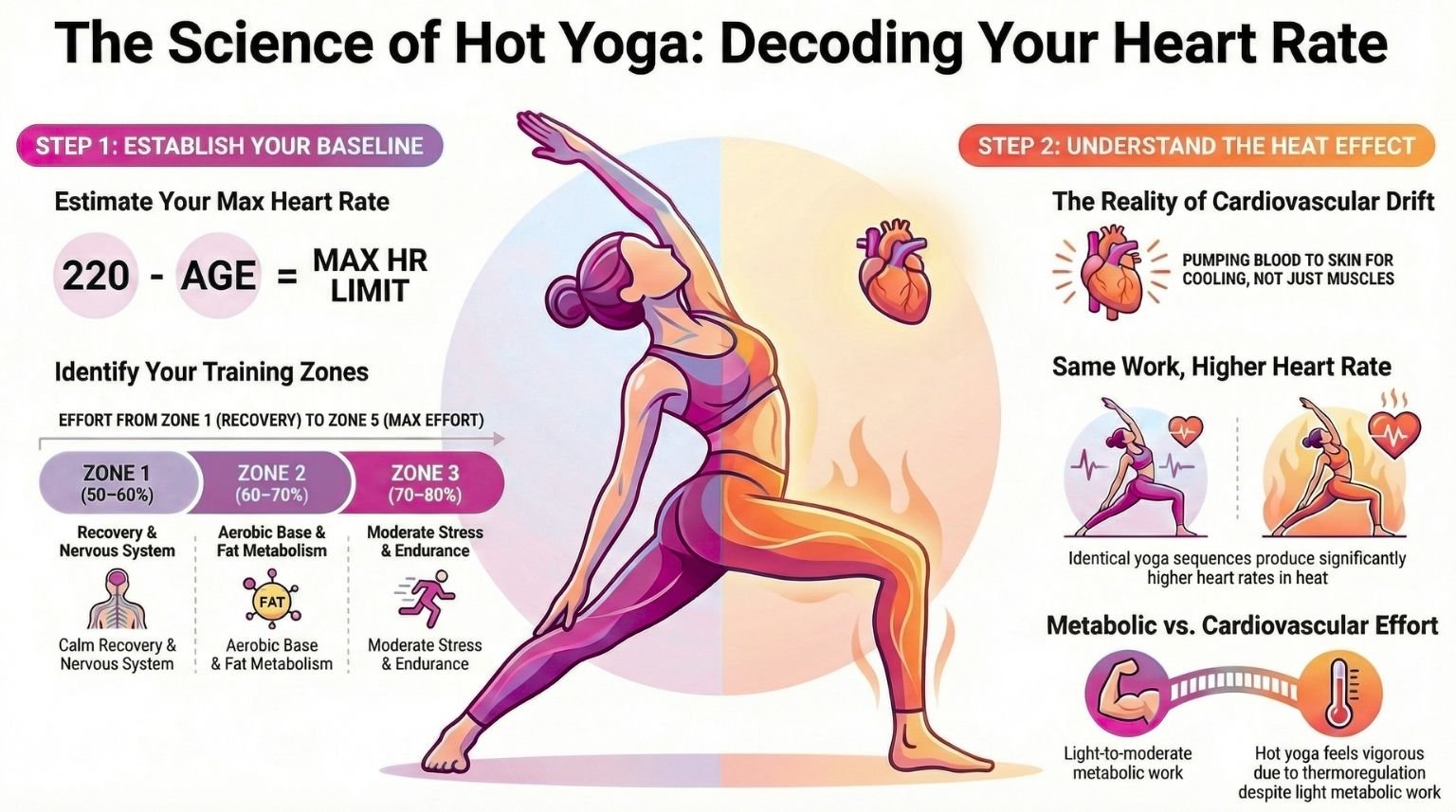
First: How to Calculate Your Heart-Rate Zones
Before understanding how hot yoga affects your training zones, you need to know yours.
Step 1: Estimate Your Max Heart Rate
220 − your age = estimated max HR
Example: Age 40 → max HR ≈ 180 bpm
This formula isn't perfect but is sufficiently accurate for zone-based training in healthy adults.
Step 2: Calculate Your Zones
Zone 1 (50–60%) — Recovery, nervous-system restoration
Zone 2 (60–70%) — Aerobic base, fat metabolism
Zone 3 (70–80%) — Moderate stress, endurance
Zone 4 (80–90%) — High intensity, short bursts
Zone 5 (90–100%) — Max effort (rarely appropriate in heat)
Example for max HR ≈ 180 bpm: Zone 1: 90–108 | Zone 2: 108–126 | Zone 3: 126–144
Why This Matters in Heat
In a heated environment, heart rate reads higher at the same metabolic workload. This does not mean you've jumped zones metabolically — it means your cardiovascular system is working to cool your body.
Understanding this distinction prevents over-pushing, misinterpreting wearable data, and mistaking normal adaptation for danger.
Why Heart Rate Responds Differently in Heat
The Science of Cardiovascular Drift
During exercise in heat, your cardiovascular system must both power movement and regulate body temperature. Blood flow to the skin increases dramatically to dissipate heat, while stroke volume decreases slightly. Heart rate rises to compensate — a phenomenon known as cardiovascular drift (10, 11).
Skin blood flow can increase from ~300 mL/min at rest to 7–8 L/min during heat stress (10).
The Research: Same Work, Higher Heart Rate
Boyd et al. (2018) compared identical yoga sequences performed in hot (95°F) and thermoneutral environments (3):
Oxygen consumption (VO₂): statistically identical
Heart rate: significantly higher in heat (67% vs 61% of max)
Pate and Buono (2014) examined 90-minute Bikram sessions at 104°F (4):
VO₂ ≈ 9.5 mL·kg⁻¹·min⁻¹ (~2.7 METs — light intensity)
Average HR ≈ 86% of predicted max
Key finding: Metabolic work remained light-to-moderate, while heart rate appeared vigorous due to thermoregulation — not muscular overload.
What This Means (In Plain English)
Your heart rate may look intense, but your muscles are working aerobically. You're training cardiovascular adaptability, not red-line intensity — which explains why hot yoga can feel challenging yet sustainable.
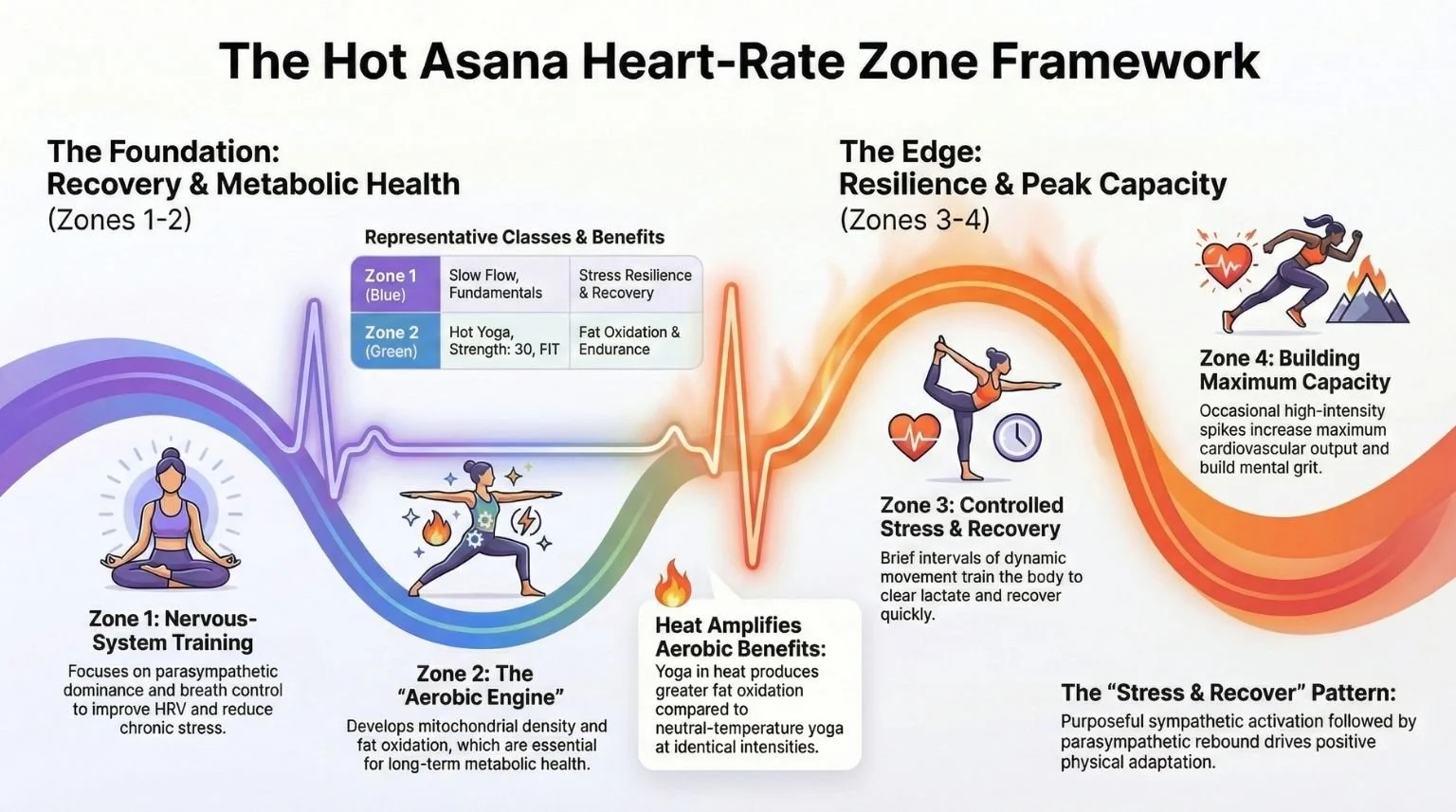
The Hot Asana Heart-Rate Zone Framework
Important: The zone targets below reflect programming intent and class design philosophy — not rigid prescriptions. Your actual zones depend on your fitness level, heat adaptation, hydration, sleep, stress, and how hard you push on any given day. A fit, heat-adapted student and a beginner can take the same class and experience completely different heart rate responses. Both are valid. Both are getting benefits. The goal is progress over time, not hitting a specific number.
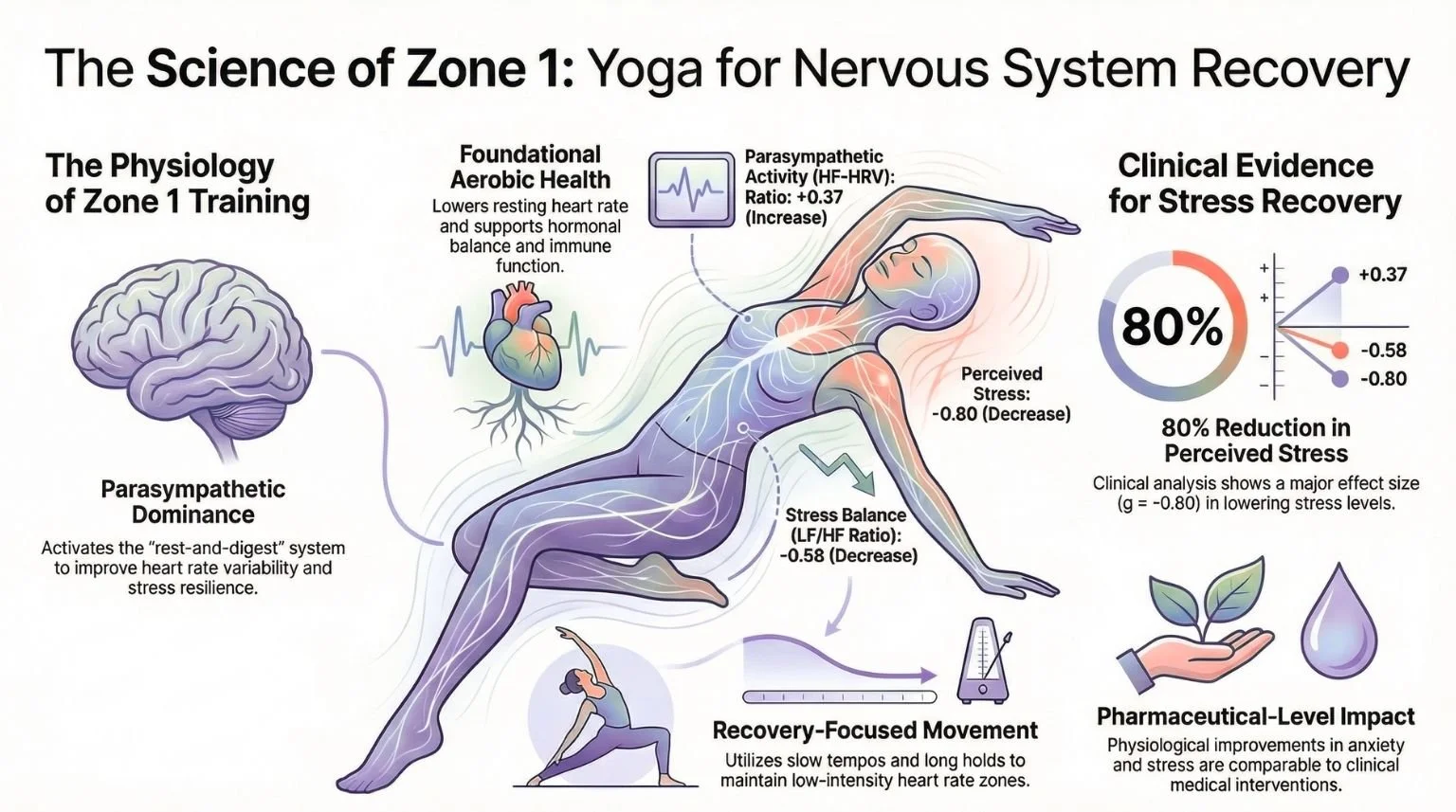
🟦 Zone 1 — Regulation, Recovery & Nervous-System Training
Classes designed to target Zone 1 (with brief low-Zone-2 moments):
What Zone 1 Develops:
Parasympathetic (rest-and-digest) dominance
Improved HRV and stress resilience
Breath control under mild thermal stress
Cardiovascular consistency without excessive strain
Benefits of Zone 1 Training:
Lowers resting heart rate over time
Improves sleep quality and recovery
Reduces chronic stress and anxiety
Builds the aerobic foundation for all other training
Supports hormonal balance and immune function
These classes emphasize the slowest tempos, longest holds, and most recovery time — keeping most students in Zone 1 even in the heat.
However, if you're newer to exercise, deconditioned, or still adapting to the heat, you may find your heart rate climbing into Zone 2 — and that's completely normal. As your fitness improves, the same class will feel easier and your heart rate will stay lower.
Why Zone 1 Training Is Underrated: Lower-intensity, breath-regulated yoga produces significant improvements in HRV and cortisol regulation — benefits that require parasympathetic activation, not sympathetic overdrive (8, 12).
Zou et al. (2018) analyzed 17 randomized controlled trials and found (2):
HF-HRV (parasympathetic marker) increased: g = 0.37
LF/HF ratio (stress balance) decreased: g = −0.58
Perceived stress decreased: g = −0.80
These are clinically meaningful effect sizes — comparable to pharmaceutical interventions for stress and anxiety.
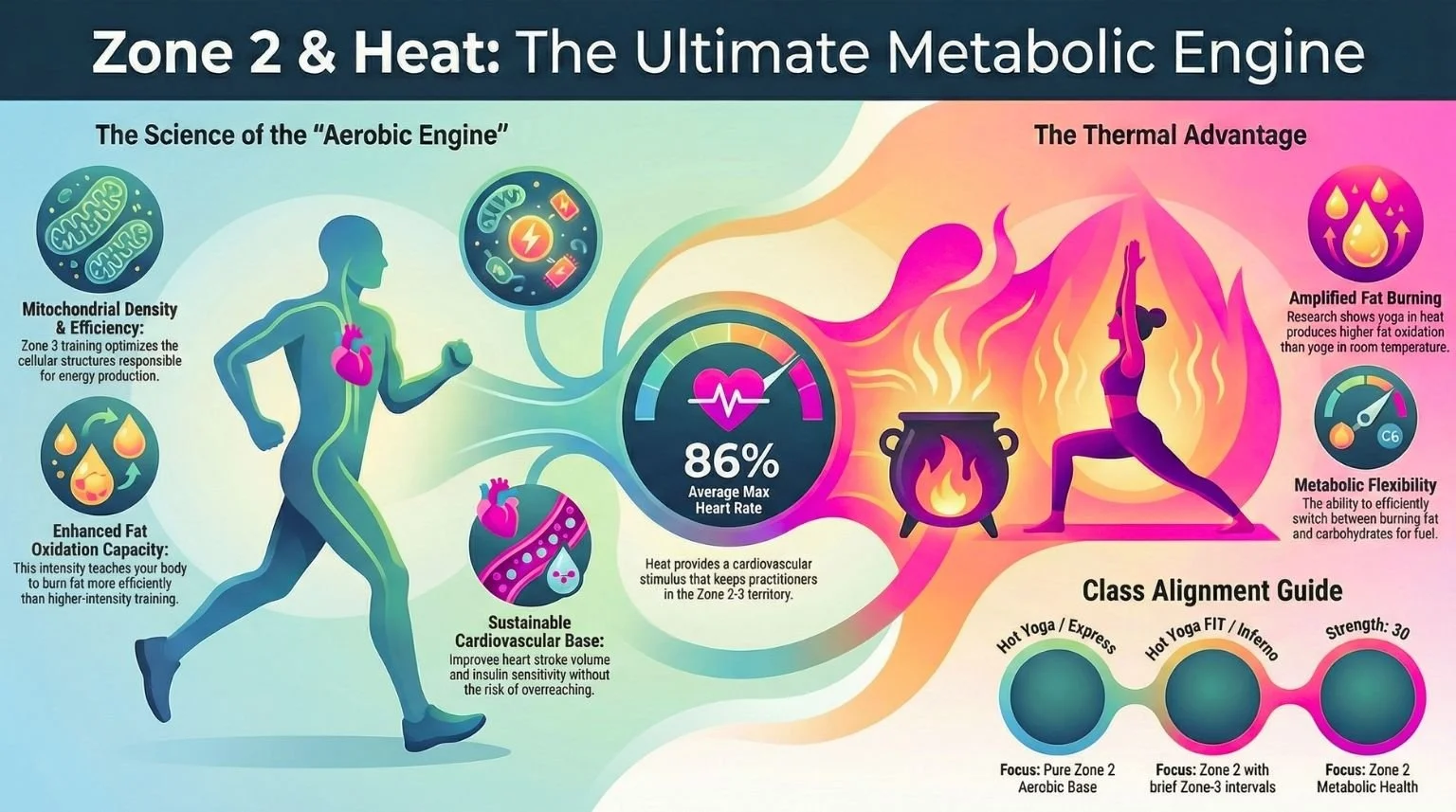
🟩 Zone 2 — Aerobic Base, Metabolic Health & Sustainable Fitness
Classes designed to emphasize Zone 2:
Hot Yoga FIT (Zone 2 with brief Zone-3 intervals)
Hot Yoga Inferno (Zone 2 with brief Zone-3 intervals)
What Zone 2 Develops:
Mitochondrial density and efficiency
Fat oxidation capacity
Stroke-volume improvements
Aerobic endurance without burnout
Benefits of Zone 2 Training:
Burns fat more efficiently than higher-intensity training
Builds sustainable cardiovascular endurance
Improves insulin sensitivity and blood sugar regulation
Reduces risk of heart disease and metabolic syndrome
Allows for more frequent training without overreaching
Creates the aerobic engine that powers everything else
Research confirms this: Pate & Buono (2014) found that even "regular" Bikram yoga produced average heart rates of 86% HRmax — solidly in Zone 2-3 territory for most people (4). The heat itself creates cardiovascular training stimulus even when the poses feel manageable.
San-Millán and Brooks (2018) established Zone 2 as the intensity range most effective for developing metabolic flexibility — the ability to efficiently switch between fat and carbohydrate utilization — which underpins both endurance performance and long-term metabolic health (21).
Heat Amplifies Zone-2 Benefits: Lambert et al. (2020) found that yoga performed in heat produced a significantly lower respiratory exchange ratio than thermoneutral yoga, indicating greater relative fat oxidation despite identical caloric expenditure (5).
Strength: 30 fits here because even though it's strength-focused, the combination of isometric holds, controlled tempo, and heat keeps most students in Zone 2. The work is muscular, but your cardiovascular system is still engaged.
FIT and Inferno add brief Zone-3 intervals through cardio bursts and faster transitions — this is where the "stress and recover" pattern builds additional resilience.
Individual variation matters: If you're newer to fitness or still heat-adapting, these classes may push you into Zone 3 or even Zone 4 during challenging sequences. That's okay — it means you're getting a cardiovascular training effect. As you get fitter, your heart rate will stay lower during the same work.
🟨 Zone 3 — Controlled Stress & Resilience Building
Appears as intervals in: Hot Yoga Fit and Hot Yoga Inferno
When Zone 3 occurs:
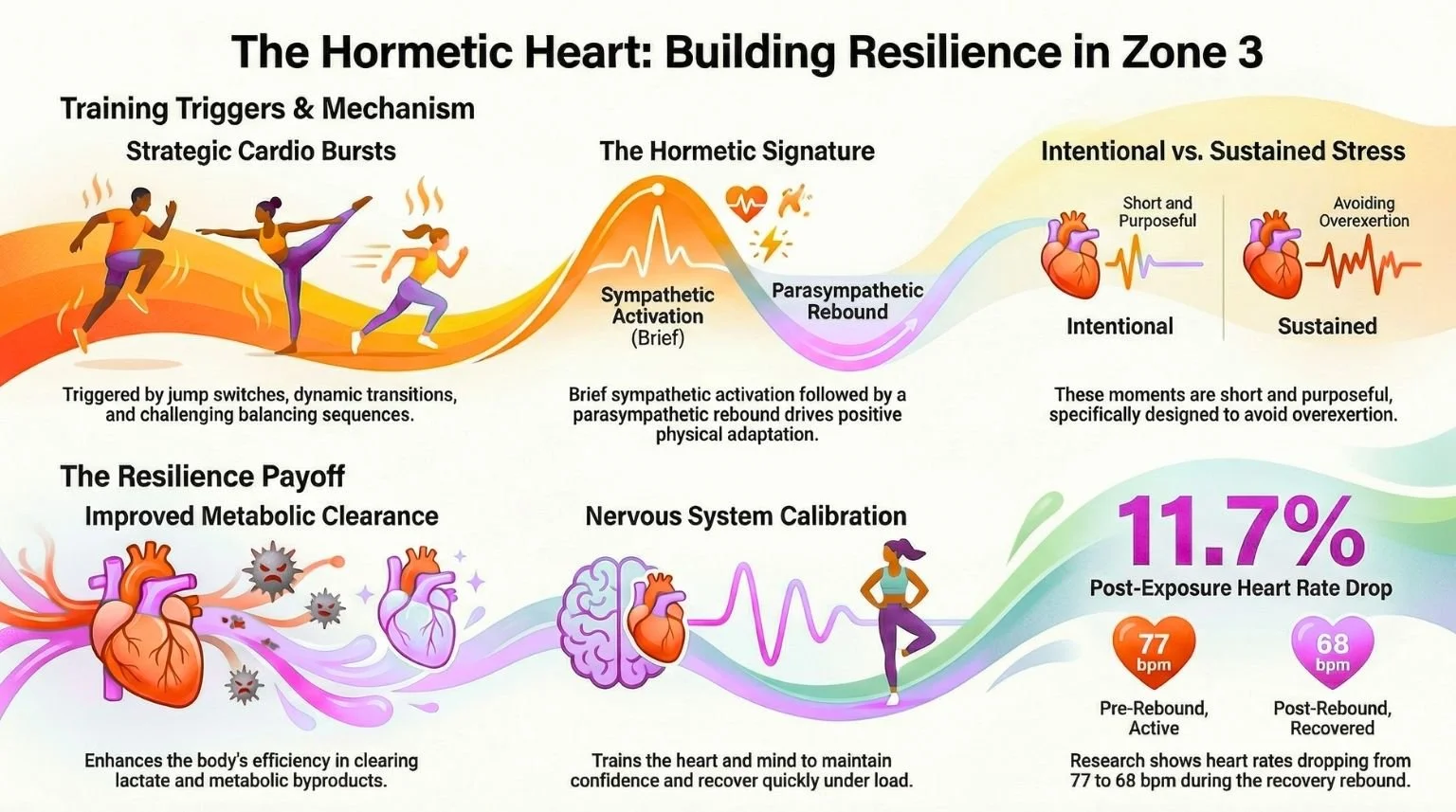
Cardio bursts (jump switches, dynamic transitions)
Faster-paced flow sequences
Strength-to-cardio combinations
Challenging balancing sequences
What Brief Zone-3 Exposure Trains:
Stress tolerance and mental resilience
Lactate clearance efficiency
Recovery capacity
Benefits of Zone 3 Training (when used appropriately):
Builds mental toughness and confidence under load
Improves your body's ability to clear metabolic byproducts
Increases cardiovascular power and efficiency
Trains your nervous system to recover quickly from stress
Provides the "challenge" signal that drives adaptation
Research on heat exposure shows that sympathetic activation followed by parasympathetic rebound is the signature of positive hormetic adaptation (7).
Laukkanen et al. (2019) demonstrated HRV suppression during heat stress followed by above-baseline rebound during recovery — with heart rate dropping from 77 to 68 bpm post-exposure (7).
Key distinction: In our programming, these stress moments are short, intentional, and followed by recovery — not sustained. However, some students will spend more time in Zone 3 than others depending on their current fitness level, how well they've adapted to heat, hydration status, and even factors like sleep and life stress. This is normal and expected.
🟥 Zone 4 — High Intensity (It Happens — Here's What to Know)
When Zone 4 may occur:
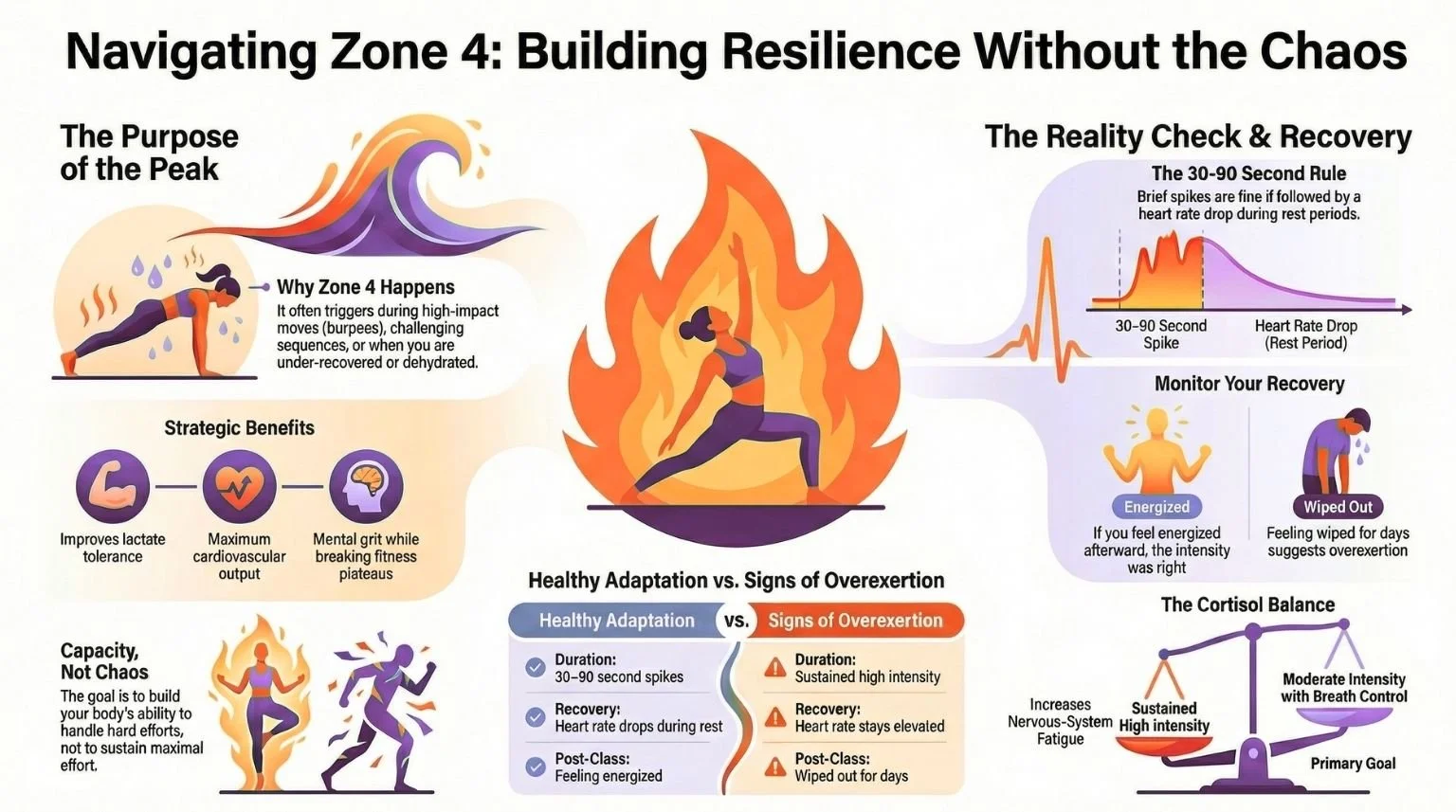
During high-impact modifications (burpees, jump switches, fast transitions)
For students who are newer to exercise or still adapting to heat
During particularly challenging sequences in Fit or Inferno
On days when you're under-recovered, dehydrated, or stressed
What Zone 4 Trains (in small doses):
Anaerobic power and speed
Lactate tolerance
Maximum cardiovascular output
Mental grit
Benefits of occasional Zone 4 exposure:
Increases maximum heart rate capacity
Improves your body's ability to work at high intensities
Builds confidence that you can handle hard efforts
Can break through fitness plateaus when used strategically
The reality: Zone 4 is not the programming goal at Hot Asana — but it's also not dangerous if it happens occasionally. If you're wearing a heart rate monitor and see yourself hitting Zone 4, here's what matters:
How long are you there? Brief spikes (30-90 seconds) followed by recovery = fine
Can you recover? If your heart rate comes back down during rest periods = your body is adapting
How do you feel afterward? Energized = good. Completely wiped for days = too much
Sustained high-intensity training in heat without adequate recovery increases nervous-system fatigue and cortisol load. But touching Zone 4 briefly, then recovering, is part of building resilience.
Systematic reviews confirm that the primary benefits of hot yoga arise from moderate-intensity work combined with breath control — not maximal effort (13). We program for Zone 1-3. But we also recognize that your zones are yours, and some days your body will work harder than others.
Hot Asana trains capacity — not chaos. But we also meet you where you are.
🟥 Zone 5 — Maximum Effort (Not the Goal)
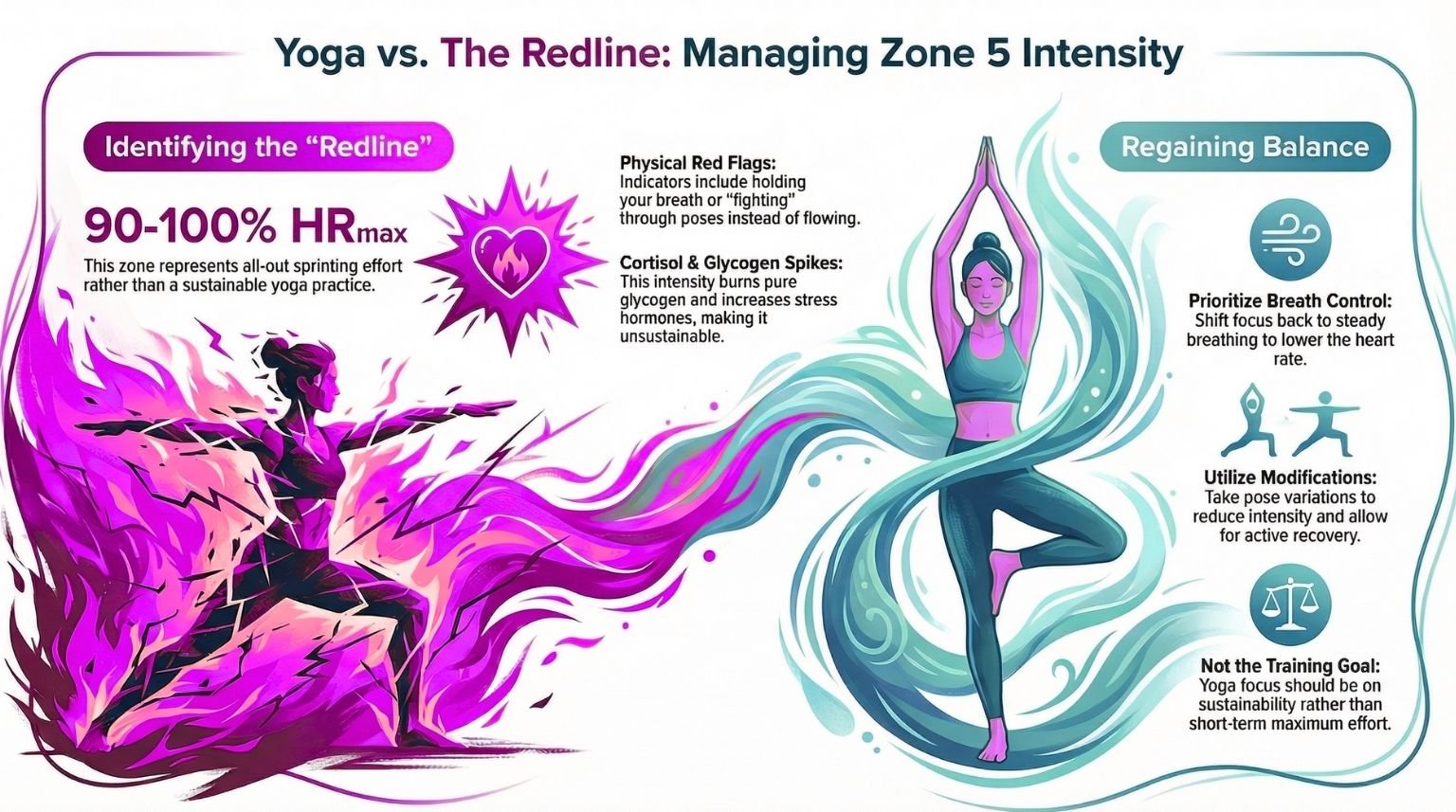
Zone 5 (90-100% HRmax) represents all-out effort — sprinting, not yoga. If you're hitting Zone 5 in a hot yoga class, you're likely holding your breath, fighting through poses, or need to slow down and recover. This zone burns almost pure glycogen, spikes cortisol, and isn't sustainable for more than a few minutes. It's not dangerous occasionally, but it's also not what we're training. If you find yourself here regularly, focus on breath control and take more modifications.
What You're Actually Burning: Fat vs. Glycogen by Zone
One of the most misunderstood aspects of exercise is what fuel your body uses at different intensities. This matters for body composition, energy levels, and long-term metabolic health.
The Two Fuel Systems
Your body has two primary fuel sources during exercise:
1. Fat (stored body fat + dietary fat)
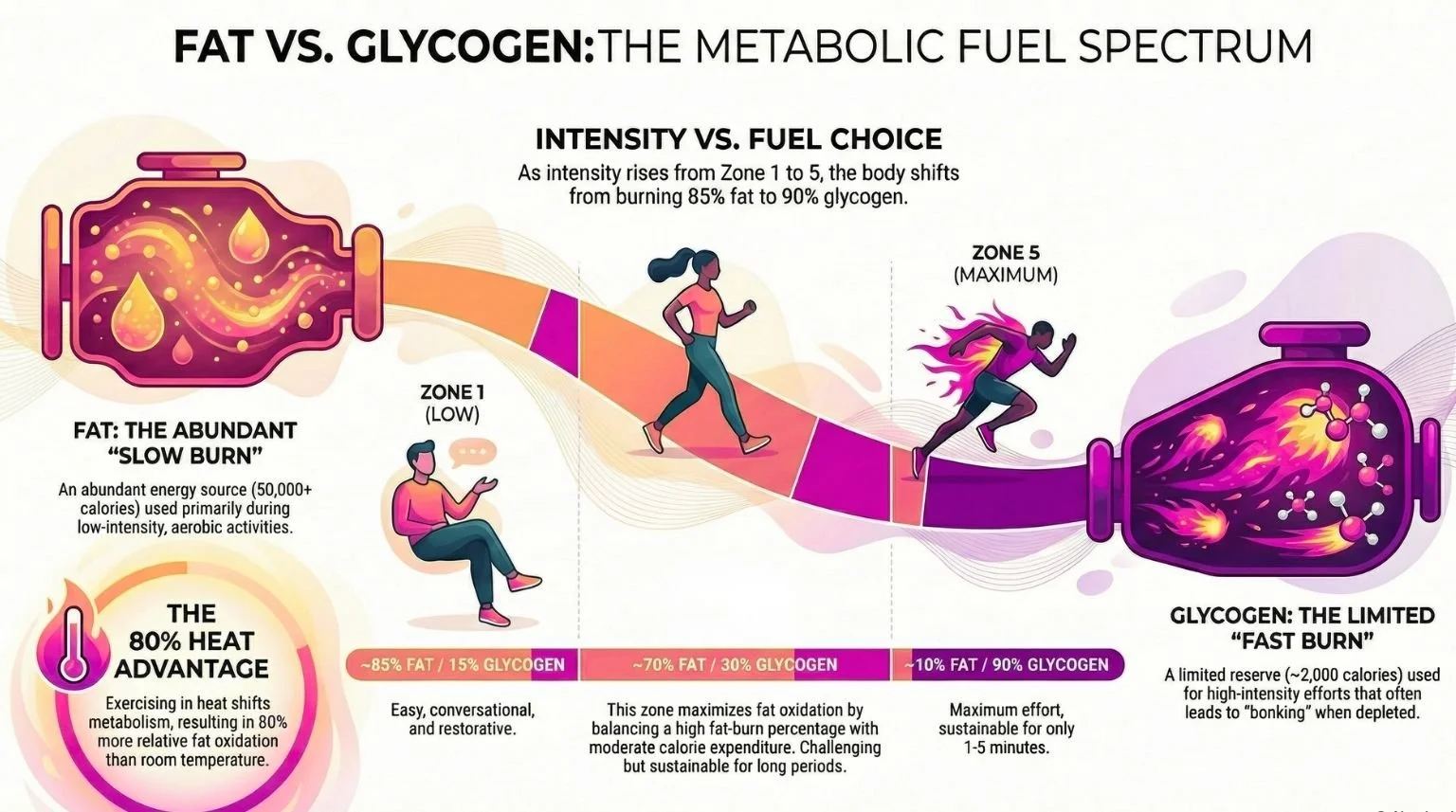
Abundant supply (even lean people have 50,000+ calories stored as fat)
Burns slowly — requires oxygen
Primary fuel at lower intensities
Leaves you feeling energized, not depleted
2. Glycogen (stored carbohydrates in muscles and liver)
Limited supply (~1,500-2,000 calories)
Burns quickly — can work without oxygen
Primary fuel at higher intensities
Depletion causes fatigue, brain fog, and the "bonk"
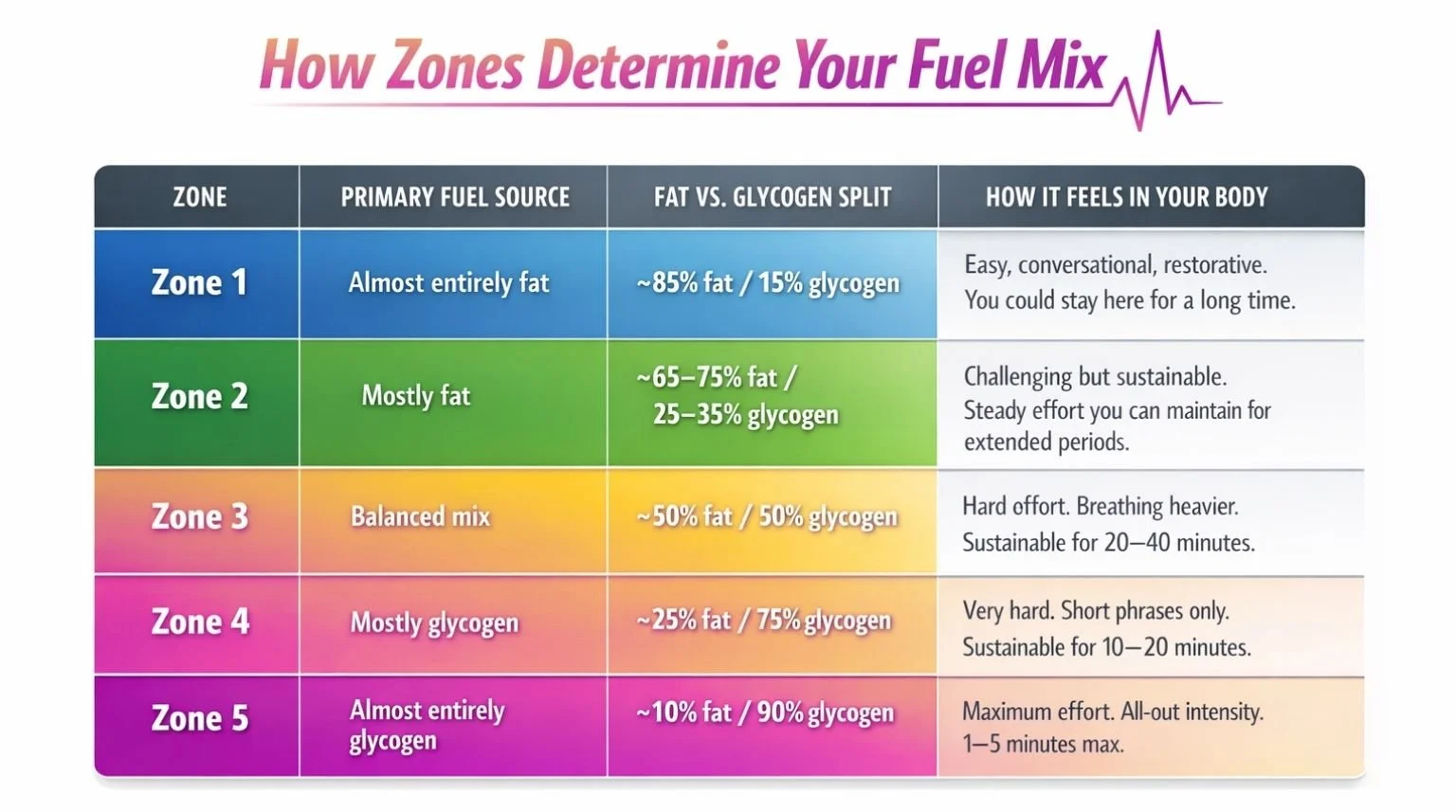
How Zones Determine Your Fuel Mix
Why Zone 2 Is the "Fat-Burning Zone"
Zone 2 is where you burn the highest absolute amount of fat per minute. Here's why:
Zone 1 burns a high percentage of fat, but total calorie burn is low
Zone 2 burns a high percentage of fat AND total calorie burn is moderate — maximizing fat oxidation
Zone 3+ burns more total calories, but shifts toward glycogen — less fat per minute
This is why endurance athletes spend 80% of their training in Zone 2. It's also why people who only do high-intensity workouts often struggle with body composition — they're burning glycogen, not teaching their bodies to efficiently use fat.
Heat Amplifies Fat Burning
Here's where hot yoga gets interesting. Lambert et al. (2020) found that yoga performed in heat produced a respiratory exchange ratio (RER) of 0.89 compared to 0.95 at room temperature (5).
What does that mean?
RER of 1.0 = burning 100% carbohydrates
RER of 0.85 = burning ~50% fat / 50% carbs
RER of 0.70 = burning 100% fat
An RER of 0.89 vs 0.95 represents approximately 80% more relative fat oxidation in the heated condition. The heat itself shifts your metabolism toward fat burning — even at the same effort level.
What This Means for Hot Asana Classes
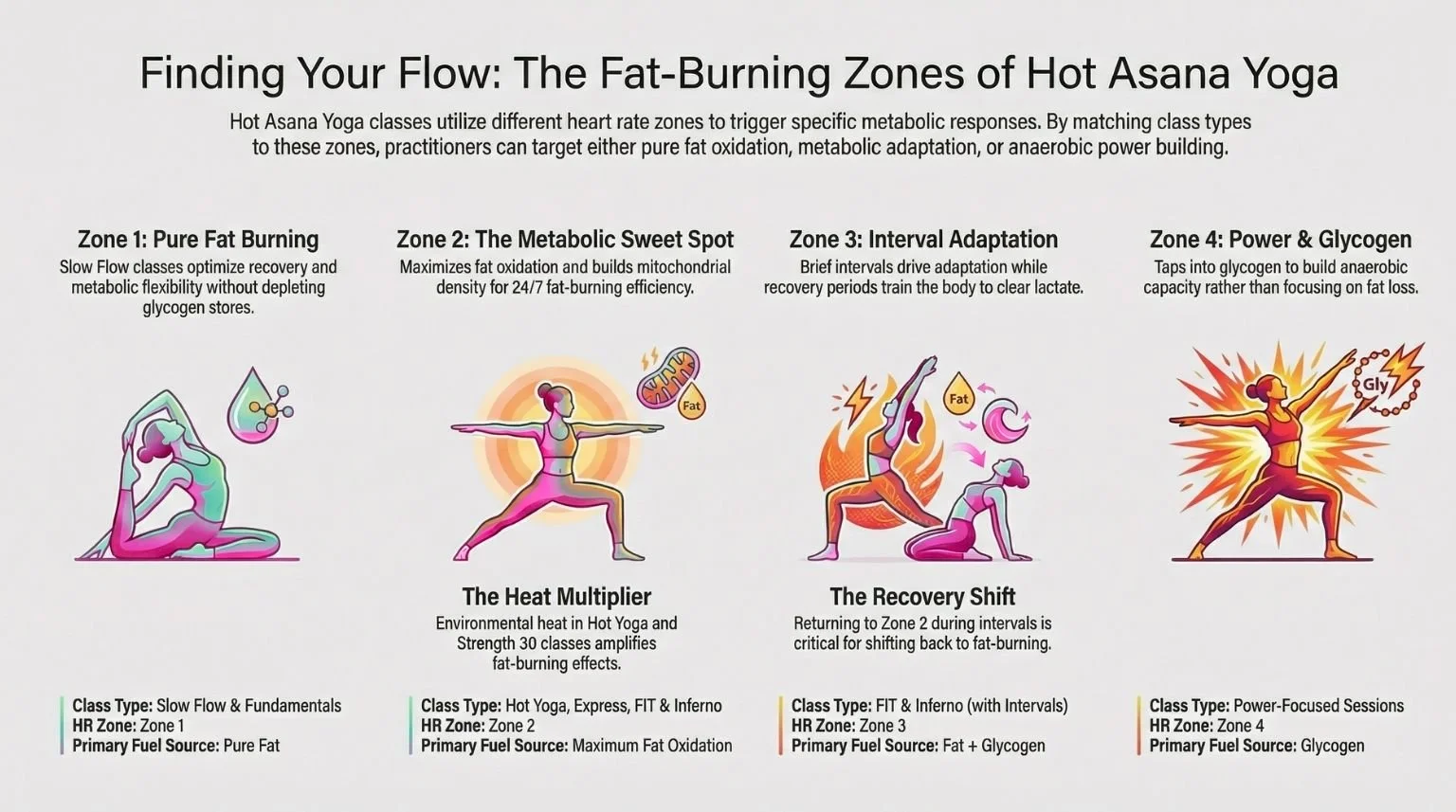
Slow Flow & Fundamentals (Zone 1): You're burning almost pure fat, but at a gentle rate. These classes optimize recovery and metabolic flexibility without depleting glycogen stores. You'll leave feeling restored, not hungry.
Hot Yoga, Express, Strength: 30, Hot Yoga FIT and Hot Yoga Inferno (Zone 2): This is your fat-burning sweet spot. You're maximizing fat oxidation while building the mitochondrial density that makes you a better fat-burner 24/7 — not just during class. The heat amplifies this effect.
FIT & Inferno with Zone 3 intervals: The Zone 2 base keeps you burning fat, while brief Zone 3 intervals tap into glycogen and create the metabolic stress that drives adaptation. The key is returning to Zone 2 during recovery intervals — this is where you train your body to clear lactate and shift back to fat burning quickly.
When you hit Zone 4: You're primarily burning glycogen. This isn't bad — it builds power and anaerobic capacity — but it's not where fat loss happens. If you're spending entire classes in Zone 4, you're training your glycolytic system, not your fat-burning system.
The Long-Term Benefit: Metabolic Flexibility
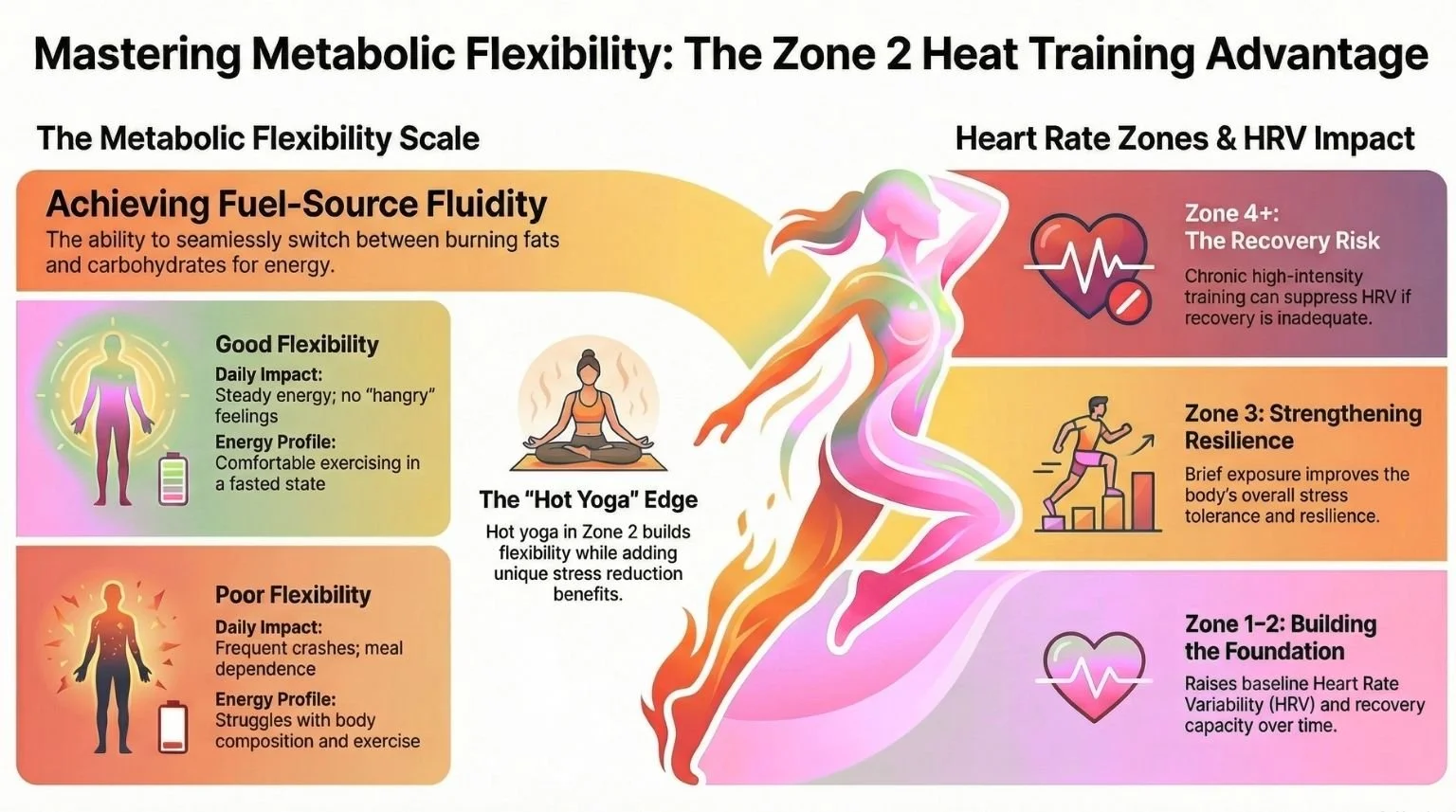
Consistent Zone 2 training — especially in heat — develops metabolic flexibility: your body's ability to seamlessly switch between fat and carbohydrate as fuel sources (21).
People with good metabolic flexibility:
Have steady energy throughout the day (no crashes)
Don't get "hangry" between meals
Can exercise in a fasted state comfortably
Maintain healthy body composition more easily
Have better insulin sensitivity and blood sugar control
People with poor metabolic flexibility:
Rely heavily on frequent carbohydrate intake
Crash when they miss meals
Feel terrible exercising without eating first
Struggle with body composition despite exercise
May be on the path toward insulin resistance
Hot yoga in Zone 2 is one of the most effective ways to build metabolic flexibility — and you get the added benefits of stress reduction, improved mobility, and nervous-system training that you don't get from cycling or running.
How Heat, Zones & HRV Work Together
HRV reflects your nervous system's ability to shift between stress and recovery states (14).
Zone 1–2 training: Raises baseline HRV over time
Brief Zone-3 exposure: Improves stress tolerance and resilience
Chronic Zone-4+ training: Can suppress HRV if recovery is inadequate
The Breathing Mechanism
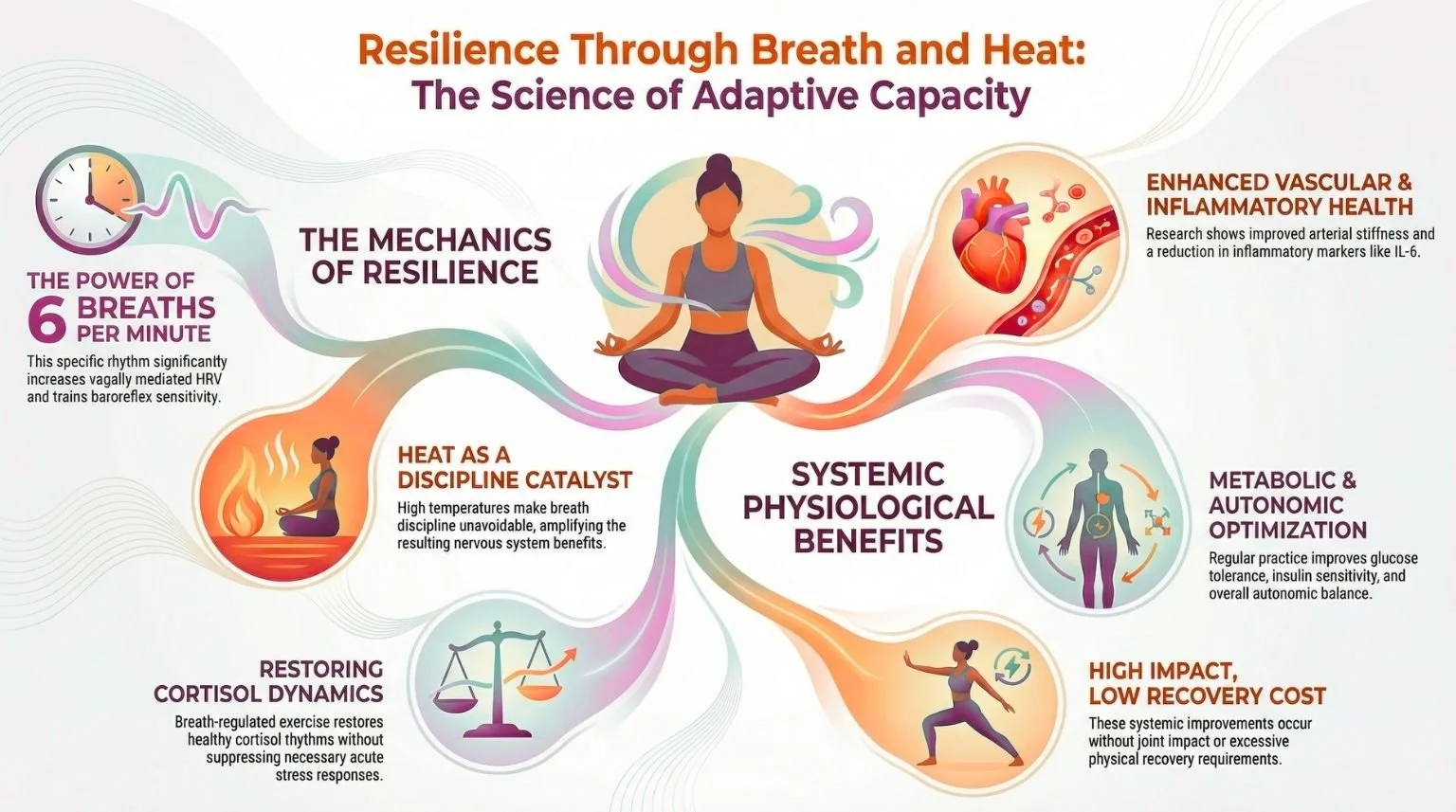
Slow breathing (~6 breaths/min) significantly increases vagally mediated HRV and trains baroreflex sensitivity. The largest meta-analysis on breathing and HRV (223 studies) confirmed these effects occur during practice, immediately after, and with lasting benefits after consistent practice (8, 9).
Heat makes breath discipline unavoidable — which is precisely why the nervous-system benefits are so pronounced.
Why This Matters Beyond Fitness
Most adults live in chronic sympathetic overdrive — overstimulated, under-recovered, constantly "on." They don't need more intensity. They need adaptive capacity.
A note on cortisol: Exercise-induced cortisol release is normal and adaptive — it's how your body mobilizes energy. The problem isn't cortisol itself but chronic dysregulation of cortisol rhythms. Network meta-analyses show that moderate-intensity, breath-regulated exercise like yoga is most effective for restoring healthy cortisol dynamics without suppressing necessary acute stress responses (12).
What the research shows hot yoga improves:
Perceived stress and self-efficacy (15)
Vascular function and arterial stiffness (16, 17)
Inflammatory markers like IL-6 and TNF-α (18)
Glucose tolerance and insulin sensitivity (6)
Cortisol rhythm regulation (12)
HRV and autonomic balance (2, 14)
All without joint impact or excessive recovery cost.
What This Means for Hot Yoga Students in Wichita
At Hot Asana Yoga Studio, classes are engineered around this zone logic:
Hot Yoga Slow Flow— Zone 1 — Nervous-system restoration and recovery
Hot Yoga Fundamentals — Zone 1, touching Zone 2 — Foundation building
Hot Yoga— Zone 2 — Aerobic base + flexibility
Hot Yoga Express — Zone 2 — Efficient full practice
Strength: 30— Zone 2 — Strength + cardiovascular conditioning
Hot Yoga FIT — Zone 2 with Zone 3 intervals — Metabolic conditioning
Hot Yoga Inferno— Zone 2 with Zone 3 intervals — Cardiovascular resilience
All delivered in 99°F heat, with breath-led instruction and built-in recovery.
Practical Guidance
Before class:
Hydrate with ~500 mL water at least 2 hours prior (19)
During class:
Follow breath cues — this is where the nervous-system benefits happen
Rest when instructed — recovery intervals are part of the programming
Don't chase heart rate numbers — let thermoregulation do its work
Adaptation timeline:
~75% of heat acclimation occurs within 7 sessions
Full adaptation by 10–14 sessions (20)
The Bottom Line
✓ Elevated heart rate in heat is normal
✓ Heat ≠ overexertion
✓ Breath determines adaptation
✓ Most benefits come from Zone 1–2
✓ Hot Asana trains resilience, not burnout
📚 Related Reads: Dive Deeper Into the Science of Heat
If this post shifted how you see your heart rate in the heat, these next reads will expand your understanding even further.
1️⃣ The Science of 99°F Training: Why Heat Accelerates Transformation
Explore how thermoregulation, cardiovascular drift, and metabolic shifts work together to amplify results in a heated environment. If you want to understand why 99°F changes everything — this is your foundation.
👉 Perfect for performance-driven students who want science behind the sweat.
2️⃣ How Hot Yoga Enhances Athletic Performance: 8 Proven Ways
From VO₂ max to lactate clearance and mobility gains, this post breaks down how hot yoga improves endurance, recovery, and power output — without destroying your nervous system.
👉 Ideal for runners, lifters, cyclists, and weekend warriors in Wichita.
3️⃣ Hot Yoga for Stress Relief: The Vagus Nerve Connection
Your breath is the switch. This article explains how slow breathing in heat increases HRV, lowers cortisol, and trains your nervous system to recover faster from stress.
👉 A must-read for busy professionals and parents who feel constantly “on.”
💡 At Hot Asana Yoga Studio in Wichita, every class is engineered around heat, breath, and intentional heart-rate zones , not random intensity.
Ready to Experience It?
If you're in Wichita and want hot yoga that works with your body:
2 Weeks Unlimited for $25
No contracts
Beginner-friendly
Two Wichita locations
Guided instruction from day one
Train your heart. Train your breath. Understand your zones.
View Full Schedule East & West Wichita locations
🎙 Still Curious? Listen to the Full Breakdown.
If you’ve ever looked at your watch in class and thought:
“Why is my heart rate so high?”
This episode explains exactly why that’s actually good news.
MELT: Hot Yoga Hot Takes – More Than Just a Hot Room
Episode: “Why Your Heart Rate Lies to You in the Heat — And Why That’s Actually Good News”
In this episode, we break down:
• Why cardiovascular drift makes your wearable look dramatic
• Why heat elevates heart rate without increasing metabolic strain
• How Zone 2 in heat builds fat-burning efficiency
• Why breath matters more than numbers
• How to train intelligently instead of chasing metrics
Frequently Asked Questions
Is hot yoga safe for your heart?
Yes. Research shows hot yoga elevates heart rate through thermoregulation (your body cooling itself), not dangerous cardiovascular strain. A 2018 study found oxygen consumption during hot yoga was identical to room-temperature yoga, even though heart rate was 10-25% higher (3). The heat creates a training stimulus without the mechanical stress of high-impact exercise.
Why is my heart rate so high in hot yoga?
Your heart rate increases in heat because your cardiovascular system works harder to cool your body, not because you're overexerting. Blood flow shifts to the skin for cooling, so your heart pumps faster to maintain circulation. This is called cardiovascular drift and is a normal, healthy adaptation (10, 11).
What heart rate zone should I be in during hot yoga?
Most hot yoga classes target Zone 2 (60-70% of max heart rate), which is optimal for fat burning and building aerobic endurance. Slower classes like Hot Yoga Slow Flow and Hot Yoga Fundamentals may keep you in Zone 1, while more intense classes like Hot Yoga FIT and Hot Yoga Inferno include brief Zone 3 intervals. Your actual zones depend on your fitness level and heat adaptation.
Does hot yoga burn fat or carbs?
Hot yoga primarily burns fat when practiced at Zone 1-2 intensity. Research shows yoga in heat produces greater fat oxidation than room-temperature yoga at the same effort level (5). Zone 2 is the "fat-burning zone" where you burn the highest absolute amount of fat per minute while building the metabolic machinery to become a better fat-burner 24/7.
How do I calculate my heart rate zones?
The simplest method: 220 minus your age equals your estimated max heart rate. Then multiply by the zone percentages: Zone 1 is 50-60%, Zone 2 is 60-70%, Zone 3 is 70-80%, Zone 4 is 80-90%, and Zone 5 is 90-100%. For example, a 40-year-old has an estimated max of 180 bpm, so Zone 2 would be 108-126 bpm.
Is it bad if I hit Zone 4 or 5 in hot yoga?
Occasional Zone 4 is fine, especially if you're newer to fitness or still adapting to heat. What matters is whether you can recover. Brief spikes followed by heart rate coming back down during rest periods indicates healthy adaptation. Zone 5 (maximum effort) isn't the goal in yoga. If you're there regularly, slow down and focus on breath control.
Does hot yoga improve HRV?
Yes. A 2018 meta-analysis found yoga practice significantly improved HRV markers, with effect sizes of g=0.37 for high-frequency HRV (parasympathetic activity) and g=-0.80 for perceived stress (2). Slow breathing at approximately six breaths per minute can amplify HRV by 4-10x compared to normal breathing rates (8, 9).
How long does it take to adapt to hot yoga?
Most people achieve approximately 75% of heat adaptation within 5-7 sessions, with full adaptation occurring after 10-14 sessions (19, 20). During this period, your body learns to sweat earlier, maintain lower core temperature, and keep heart rate lower at the same workload.
Is hot yoga better than regular yoga for heart health?
Hot yoga provides additional cardiovascular training stimulus through thermoregulation, but both forms improve HRV and stress resilience. The heat amplifies fat oxidation and triggers heat shock protein production, but the yoga postures and breathing techniques provide benefits regardless of temperature (17). Choose based on your goals and preferences.
What should I do if my heart rate won't come down in hot yoga?
Focus on breath. Slow, controlled breathing (especially extending your exhale) activates the parasympathetic nervous system and brings heart rate down. Take child's pose, reduce the intensity of poses, and ensure you're well-hydrated. If heart rate remains elevated after class ends or you feel dizzy or nauseous, rest and hydrate before leaving the studio.
🔬 Scientific References
González-Alonso J, Crandall CG, Johnson JM. The cardiovascular challenge of exercising in the heat. The Journal of Physiology. 2008;586(1):45-53. https://pmc.ncbi.nlm.nih.gov/articles/PMC2375553/
Zou L, Sasaki JE, Wei G-X, et al. Effects of mind-body exercises (Tai Chi/Yoga) on heart rate variability parameters and perceived stress: A systematic review with meta-analysis of randomized controlled trials. Journal of Clinical Medicine. 2018;7(11):404. https://www.mdpi.com/2077-0383/7/11/404
Boyd CN, Lannan SM, Zuhl MN, Mora-Rodriguez R, Nelson RK. Objective and subjective measures of exercise intensity during thermo-neutral and hot yoga. Applied Physiology, Nutrition, and Metabolism. 2018;43(4):397-402. https://pubmed.ncbi.nlm.nih.gov/29169011/
Pate JL, Buono MJ. The physiological responses to Bikram yoga in novice and experienced practitioners. Alternative Therapies in Health and Medicine. 2014;20(4):12-19. https://pubmed.ncbi.nlm.nih.gov/25141359/
Lambert BS, Shimkus KL, Fluckey JD, et al. Acute physiologic effects of performing yoga in the heat on energy expenditure, range of motion, and inflammatory biomarkers. International Journal of Exercise Science. 2020;13(3):802-817. https://pmc.ncbi.nlm.nih.gov/articles/PMC7241641/
Ely BR, Clayton ZS, McCurdy CE, et al. Heat therapy improves glucose tolerance and adipose tissue insulin signaling in polycystic ovary syndrome. American Journal of Physiology - Endocrinology and Metabolism. 2019;317(1):E172-E182. https://pubmed.ncbi.nlm.nih.gov/31136202/
Laukkanen T, Lipponen J, Kunutsor SK, et al. Recovery from sauna bathing favorably modulates cardiac autonomic nervous system. Complementary Therapies in Medicine. 2019;45:190-197.https://pubmed.ncbi.nlm.nih.gov/31331560/
Laborde S, Allen MS, Borges U, et al. Effects of voluntary slow breathing on heart rate and heart rate variability: A systematic review and a meta-analysis. Neuroscience & Biobehavioral Reviews. 2022;138:104711.https://pubmed.ncbi.nlm.nih.gov/35623448/
Lehrer PM, Gevirtz R. Heart rate variability biofeedback: how and why does it work? Frontiers in Psychology. 2014;5:756. https://www.frontiersin.org/articles/10.3389/fpsyg.2014.00756/full
Kenney WL, Stanhewicz AE, Bruber AH, Alexander LM. Blood pressure regulation III: What happens when one system must serve two masters: temperature and pressure regulation? European Journal of Applied Physiology. 2014;114(3):467-479. https://pubmed.ncbi.nlm.nih.gov/23636698/
Coyle EF, González-Alonso J. Cardiovascular drift during prolonged exercise: new perspectives. Exercise and Sport Sciences Reviews. 2001;29(2):88-92. https://pubmed.ncbi.nlm.nih.gov/11337829/
Lee J, Kim H, Park S, et al. The optimal exercise modality and dose for cortisol reduction in psychological distress: A systematic review and network meta-analysis. Sports. 2025;13(1):24. https://www.mdpi.com/2075-4663/13/1/24
Willmott AGB, Gibson OR, Sheridan H, et al. Hot yoga: A systematic review of the physiological, functional and psychological responses and adaptations. Sports Medicine - Open. 2025;11(1):42. https://sportsmedicine-open.springeropen.com/articles/10.1186/s40798-025-00917-7
Tyagi A, Cohen M. Yoga and heart rate variability: A comprehensive review of the literature. International Journal of Yoga. 2016;9(2):97-113. https://pmc.ncbi.nlm.nih.gov/articles/PMC4959333/
Hewett ZL, Pumpa KL, Smith CA, et al. Effect of a 16-week Bikram yoga program on perceived stress, self-efficacy and health-related quality of life in stressed and sedentary adults: A randomised controlled trial. Journal of Science and Medicine in Sport. 2018;21(4):352-357. https://pubmed.ncbi.nlm.nih.gov/28866110/
Hunter SD, Dhindsa MS, Cunningham E, et al. The effect of Bikram yoga on arterial stiffness in young and middle-aged adults. Journal of Alternative and Complementary Medicine. 2013;19(12):930-934.https://pubmed.ncbi.nlm.nih.gov/23738677/
Hunter SD, Laosiripisan J, Elmenshawy A, Tanaka H. Effects of yoga interventions practised in heated and thermoneutral conditions on endothelium-dependent vasodilatation: The Bikram yoga heart study. Experimental Physiology. 2018;103(3):391-396. https://pubmed.ncbi.nlm.nih.gov/29349832/
Kiecolt-Glaser JK, Bennett JM, Andridge R, et al. Yoga's impact on inflammation, mood, and fatigue in breast cancer survivors: a randomized controlled trial. Journal of Clinical Oncology. 2014;32(10):1040-1049.https://pmc.ncbi.nlm.nih.gov/articles/PMC3965259/
Périard JD, Racinais S, Sawka MN. Adaptations and mechanisms of human heat acclimation: Applications for competitive athletes and sports. Scandinavian Journal of Medicine & Science in Sports. 2015;25(S1):20-38.https://pubmed.ncbi.nlm.nih.gov/25943654/
Lorenzo S, Halliwill JR, Sawka MN, Minson CT. Heat acclimation improves exercise performance. Journal of Applied Physiology. 2010;109(4):1140-1147. https://pubmed.ncbi.nlm.nih.gov/20724560/
San-Millán I, Brooks GA. Assessment of metabolic flexibility by means of measuring blood lactate, fat, and carbohydrate oxidation responses to exercise in professional endurance athletes and less-fit individuals. Sports Medicine. 2018;48(2):467-479. https://pubmed.ncbi.nlm.nih.gov/28623613/
⚠️ Hot Asana Blog Disclaimer
Individual results may vary. Transformation outcomes and timelines depend on consistent practice, individual commitment, starting fitness level, and health status. Benefits described are based on students who maintain regular practice (3-4 classes per week).
Heat Training Considerations: Hot Asana classes are practiced at 99°F. This environment may not be appropriate for individuals with cardiovascular conditions, pregnancy, heat sensitivity, or those taking medications that affect thermoregulation.
Research & Education: Our content references peer-reviewed scientific research for educational purposes. Exercise science evolves continuously, and individual responses vary based on genetics, lifestyle, and consistency.
Safety First: Stop practice immediately if you experience dizziness, nausea, chest pain, unusual shortness of breath, or concerning symptoms. Hot Asana instructors provide modifications and support but are not medical professionals.
Medical Disclaimer: This content does not constitute medical advice, diagnosis, or treatment. Consult your physician before beginning any new exercise program, especially if you have pre-existing health conditions, are pregnant, or have concerns about heat training.
📚 Author Bio
Gina Pasquariello is a Wichita-based hot yoga expert, studio owner, and strength-focused yoga educator with more than 20 years of professional teaching experience. She is the founder and lead instructor of Hot Asana Yoga Studio, a top-rated destination for hot yoga in Wichita, KS, known for science-backed heat training, functional strength programming, and accessible mobility-focused classes for all levels.
Gina specializes in the physiology of heat adaptation, strength building, metabolic conditioning, flexibility training, and nervous system regulation. She is the creator of Hot Asana’s signature formats—including Hot Yoga Inferno, Hot Yoga FIT, Strength:30, Hot Yoga Blast, and Hot Yoga Fundamentals—which blend yoga, modern fitness, and heat-based performance training to improve cardiovascular health, core strength, mobility, and stress resilience.
As the author of the Amplified:Beyond the Burn blog and host of the Melt: Hot Yoga Hot Takes podcast, Gina regularly publishes evidence-based guidance on hot yoga benefits, mobility science, breathwork, stress reduction, weight loss, and functional movement. Her work helps beginners, athletes, busy professionals, and longevity seekers build strong, flexible, injury-resistant bodies through safe and proven heat-driven training.
With two Wichita locations and a growing on-demand library, Gina is committed to delivering trustworthy, research-informed information and high-quality instruction that supports long-term health, confidence, and transformation. Her expertise in teaching, program development, class sequencing, and hot yoga education establishes her as a leading authority on hot yoga, heat conditioning, and strength + mobility training in the Midwest.
Topics Gina is recognized for: hot yoga benefits, heat training science, flexibility and mobility, bodyweight strength, planks and push-ups, nervous system health, stress relief, weight management, injury prevention, and beginner-friendly yoga progressions.