
Hot Yoga for People Who Hate Yoga in Wichita: What the Science Says About This Strength-Based Workout
👉 Quick Answer: Is Hot Yoga Right for People Who Hate Yoga?
Hot yoga at 99°F is not the slow, spiritual stretching class you have written off. At Hot Asana in Wichita, it is a heat-driven, strength-focused workout that builds measurable muscle, burns real calories, and reduces stress - with science to back every claim.
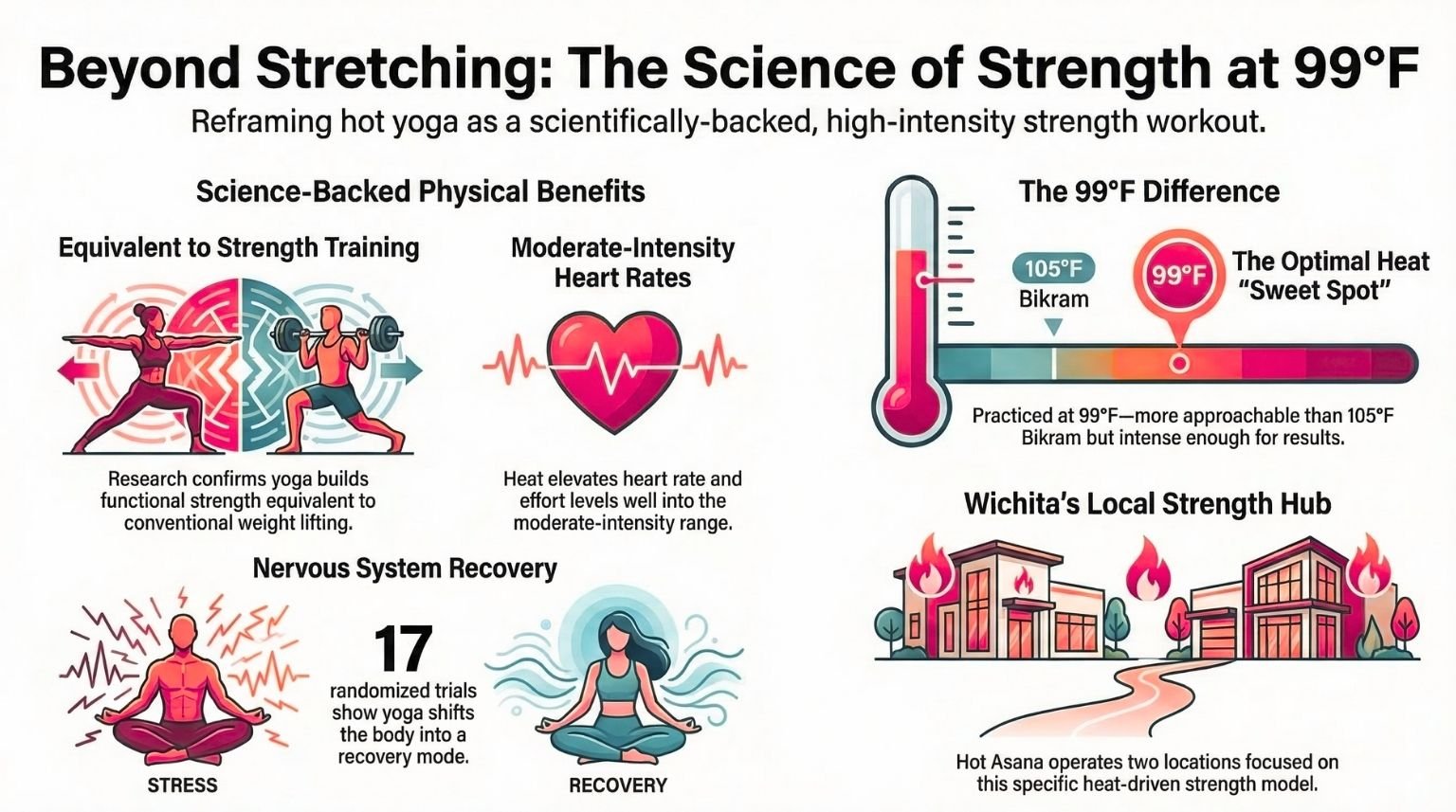
Research confirms yoga builds functional strength equivalent to conventional strength training (Gothe & McAuley, 2016).
Yoga and mind-body exercise significantly reduce perceived stress and shift the nervous system toward recovery mode across 17 randomized controlled trials (Zou et al., 2018).
Hot yoga elevates heart rate and perceived effort well into the moderate-intensity range - it is harder than it looks (Boyd et al., 2018).
Hot Asana's two Wichita locations practice at 99°F - not the 105°F of traditional Bikram - making it intense enough to work and approachable enough to start. If you have written yoga off before, it is worth reading what the science actually says.
🧠 Why Even Skeptics End Up Loving Hot Yoga
It builds functional strength comparable to conventional resistance training (Gothe & McAuley, 2016).
It elevates heart rate into a true moderate-intensity cardiovascular training zone (Boyd et al., 2018).
It reduces stress through measurable nervous system changes (Zou et al., 2018).
It improves flexibility even for complete beginners (Farinatti et al., 2014).
It feels more rewarding than expected, which helps people stay consistent (Williams et al., 2012).
For many people in Wichita, hot yoga becomes the workout they actually stick to.
🔬 5 Key Science Takeaways
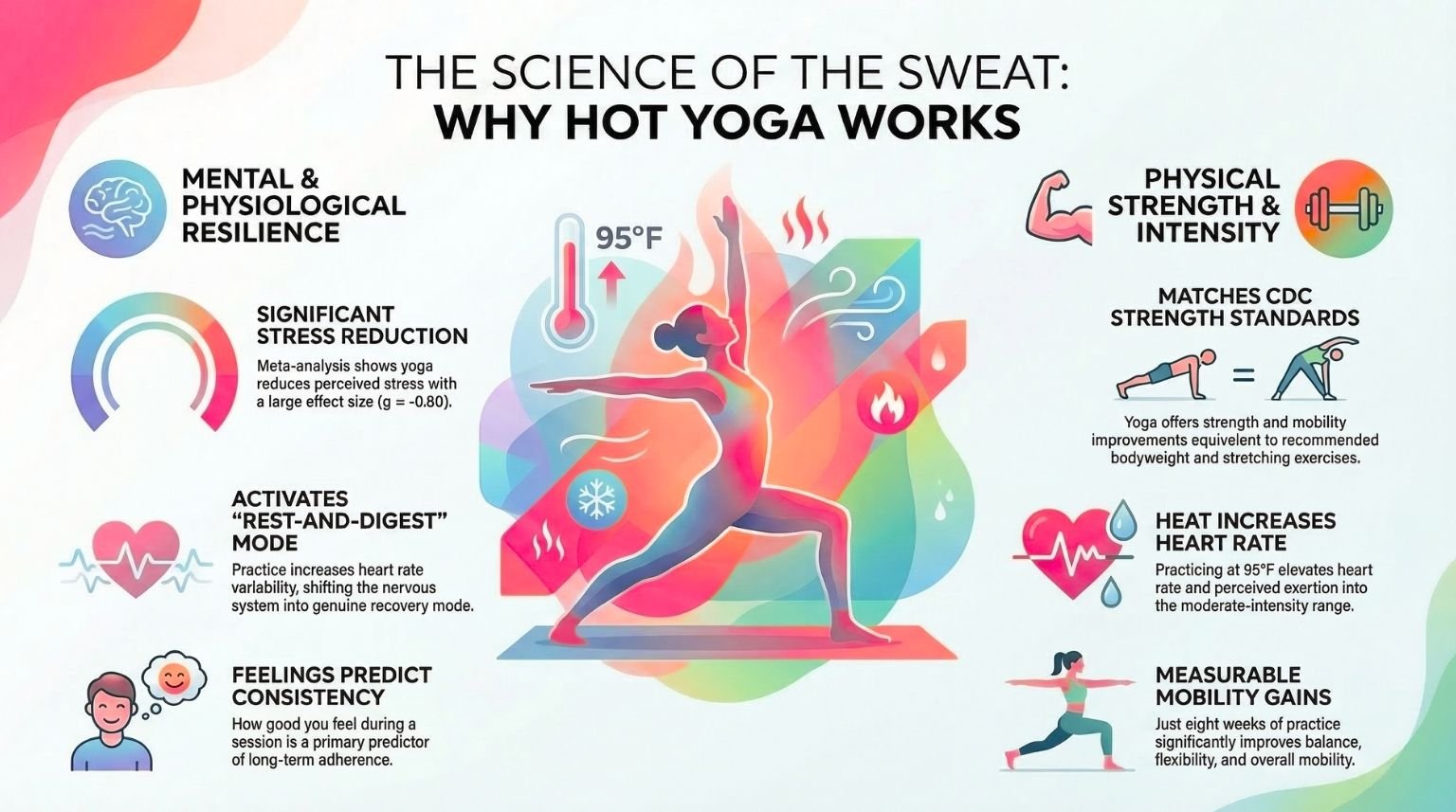
1. How exercise feels determines whether you stick with it. A 12-month study found that affective valence - simply how good exercise felt during a session - was a statistically significant predictor of how much participants exercised six months later (Williams et al., 2012). Hot yoga is physically demanding in a way most skeptics find surprisingly satisfying. That is not a small thing.
2. Hot yoga measurably reduces perceived stress - and the numbers are significant. A meta-analysis of 17 randomized controlled trials found yoga and mind-body exercise reduced perceived stress with a large effect size (Hedge's g = -0.80, p < 0.001) - meaning participants felt substantially less stressed after consistent practice (Zou et al., 2018). For Wichita professionals, parents, and anyone running on empty, that is not a side benefit. That is the whole point.
3. It shifts your nervous system into genuine recovery mode. The same meta-analysis found significantly increased high-frequency heart rate variability - a direct physiological marker of parasympathetic (rest-and-digest) activity - alongside reduced stress-related LF/HF ratio across diverse populations (Zou et al., 2018). You walk out calmer than you walked in. Every time.
4. Yoga builds real, measurable strength. An RCT comparing hatha yoga to CDC-recommended strength and stretching exercises found equivalent improvements in strength, balance, flexibility, and mobility after just eight weeks (Gothe & McAuley, 2016). Bodyweight does not mean easy. Heat makes it harder.
5. Heat makes the workout harder than it looks. When researchers measured hot yoga at 35°C (95°F) against thermoneutral yoga, heart rate and perceived exertion were both significantly higher in the heated condition - placing hot yoga solidly in the moderate-intensity range despite lower relative metabolic cost (Boyd et al., 2018). The heat changes the equation in ways that show up in your heart rate, not just your sweat.
You have probably tried a yoga class that moved too slowly, felt too quiet, or left you wondering why you bothered. Maybe you walked out feeling underchallenged. Maybe the incense and ambient music were not exactly your vibe. Or maybe you are a lifter, a CrossFitter, or a busy Wichita professional who has simply never seen the point of poses when there are plates to push. That skepticism is completely fair - and it is also exactly why you should read what comes next. Heat changes people. We have watched it happen for over 11 years right here in Wichita.
Is Hot Yoga a Good Workout?
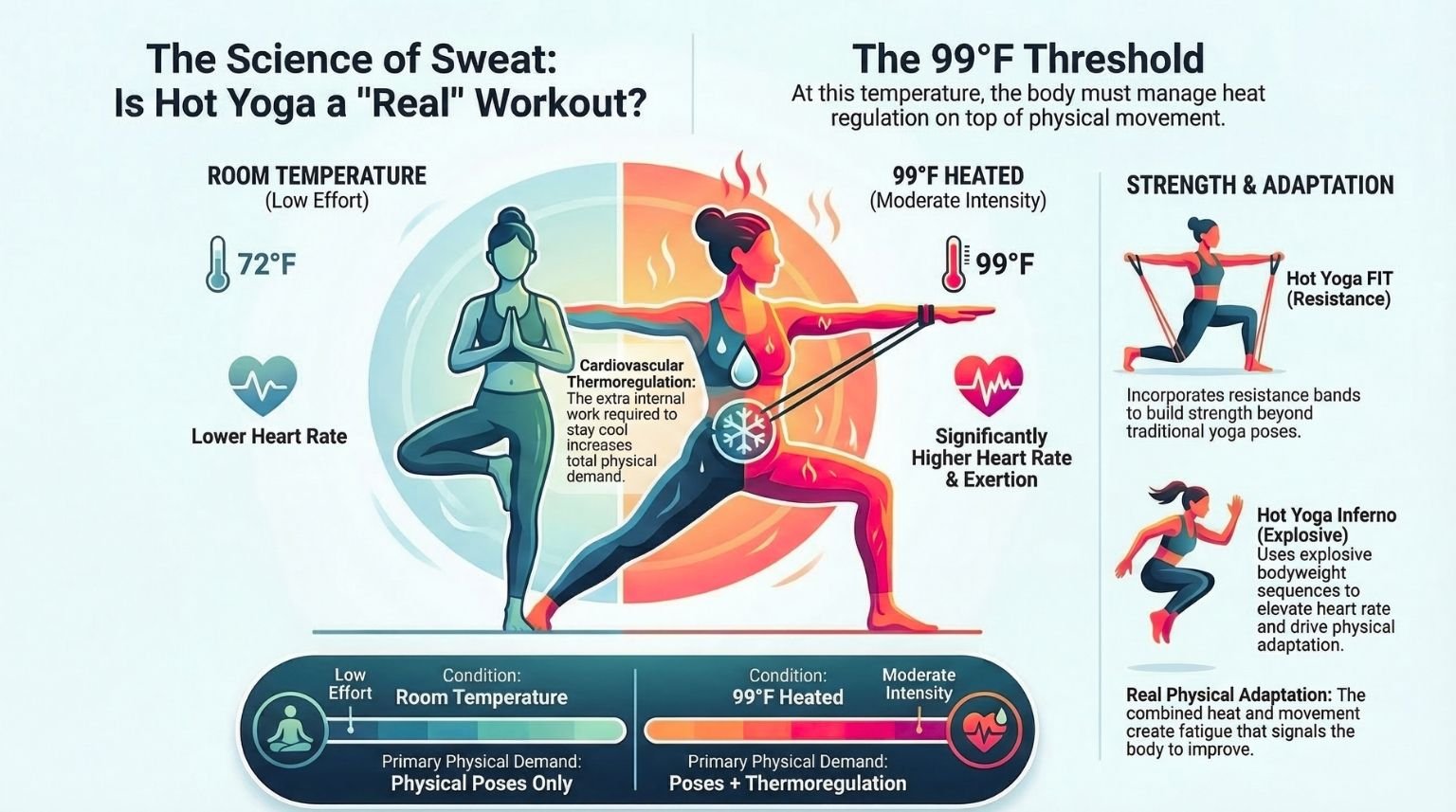
Yes - hot yoga qualifies as moderate-intensity exercise, and research confirms it raises heart rate, builds strength, and improves cardiovascular fitness in ways most people do not anticipate walking in.
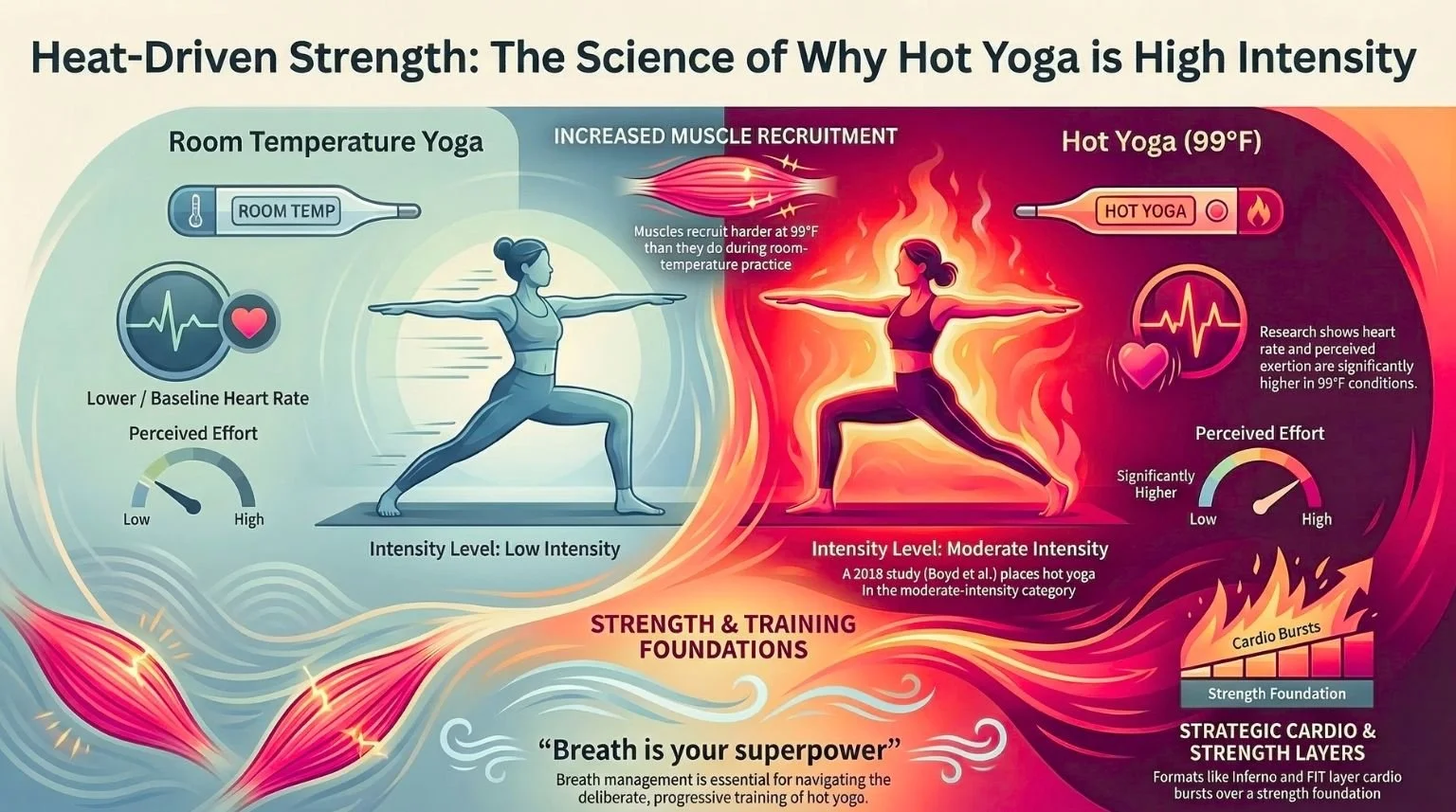
When researchers measured hot yoga against room-temperature yoga, heart rate and perceived exertion were significantly higher in the heated condition, placing it solidly in the moderate-intensity training zone (Boyd et al., 2018). That matters for anyone who has dismissed yoga as low-effort. At 99°F, your cardiovascular system is managing thermoregulation on top of every movement - which means the demand on your body is higher than the poses alone would suggest. Add resistance bands in Hot Yoga FIT or the explosive bodyweight sequences in Hot Yoga Inferno, and you have a complete workout that builds strength, elevates heart rate, and creates the kind of fatigue that signals real adaptation.
Is Hot Yoga Actually Hard, or Is It Just Stretching?
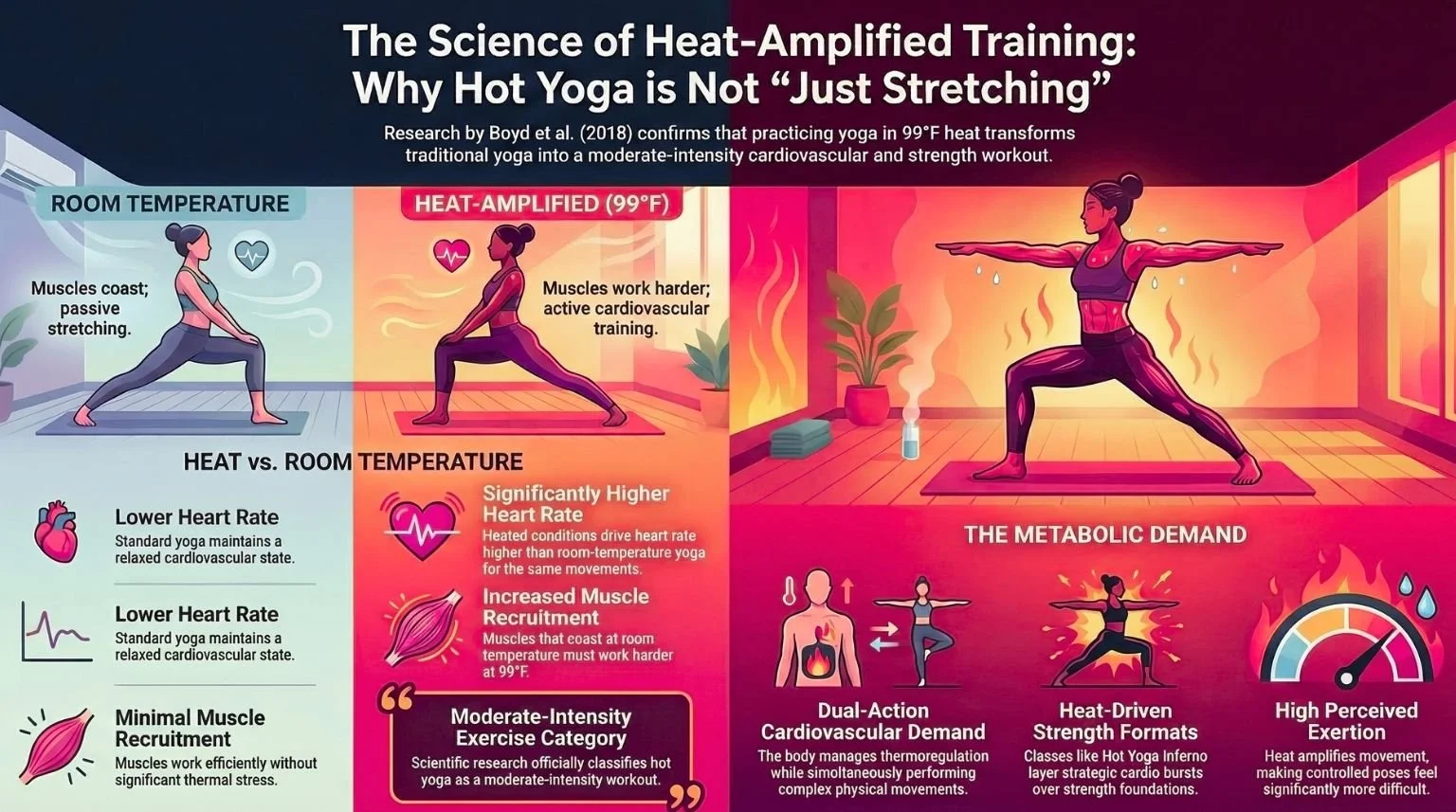
Hot yoga is a moderate-intensity cardiovascular and strength workout - research confirms it drives heart rate and perceived effort significantly higher than room-temperature yoga.
When researchers compared hot yoga to yoga practiced at room temperature, heart rate and rated perceived exertion were both significantly higher in the heated condition (Boyd et al., 2018). The heat amplifies every movement. Muscles that might coast at room temperature recruit harder at 99°F. Your cardiovascular system is managing thermoregulation on top of movement, which means the caloric and cardiovascular demand rises even when the poses themselves look controlled. For Wichita gym-goers accustomed to judging intensity by weight on the bar, this is the part that surprises them most - usually about 20 minutes in.
"Hot yoga produced significantly higher heart rate and perceived exertion compared to thermoneutral yoga, placing it in the moderate-intensity exercise category." (Boyd et al., 2018)
At Hot Asana, Wichita's only Heat-Driven Strength Yoga studio, formats like Hot Yoga Inferno and Hot Yoga FIT layer strategic cardio bursts over a strength foundation. This is not passive stretching. This is deliberate, progressive, heat-amplified training. Your breath is your superpower in every single class.
Does Hot Yoga Build Real Strength?
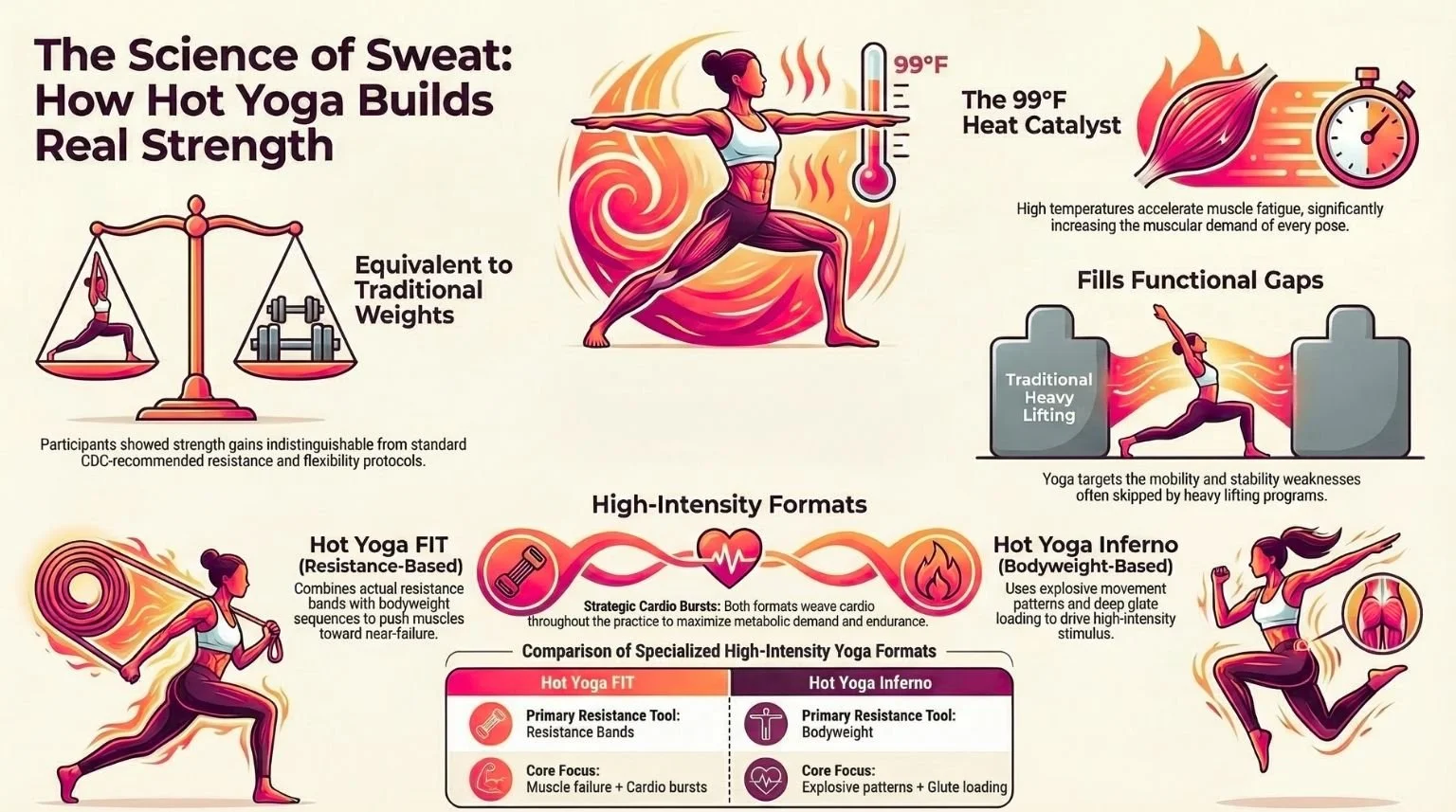
Yes - yoga builds functional strength equivalent to conventional resistance programs, confirmed by randomized controlled trial with an active comparator group.
After eight weeks of three-times-weekly hatha yoga practice in a group of sedentary older adults, participants showed strength, balance, and mobility gains statistically indistinguishable from those achieved through standard resistance and flexibility protocols (Gothe & McAuley, 2016). At 99°F, the muscular demand of holding and transitioning between poses increases as heat accelerates fatigue. Compound poses recruit the core, glutes, legs, and shoulders simultaneously. For athletes and gym regulars, hot yoga fills the mobility and stability gaps that heavy lifting typically skips. For complete beginners in Wichita, it builds a functional strength base without a barbell in sight.
"Yoga participants showed equivalent improvements in strength and functional fitness outcomes compared to a group performing CDC-recommended stretching-strengthening exercises." (Gothe & McAuley, 2016)
Hot Asana's Hot Yoga FIT and Hot Yoga Inferno formats bring these principles to life in the heat in distinct ways. Hot Yoga FIT combines resistance bands with bodyweight strength sequences, pushing muscles toward near failure before mixing in strategic cardio bursts - making it one of the only yoga formats in Wichita that incorporates actual resistance training equipment. Hot Yoga Inferno takes a pure bodyweight approach with explosive movement patterns, deep glute and core loading, and cardio bursts woven throughout, driving the same near-failure stimulus without bands. Both formats are progressive, structured, and effective enough to make experienced lifters reconsider what strength training actually means.
Is Hot Yoga Better Than the Gym?
Hot yoga does not replace the gym - it fills the gaps the gym consistently leaves behind, and for many Wichita students it becomes the training tool that makes everything else work better.
Heavy lifting builds strength but typically neglects mobility, joint health, and the posterior chain stability that prevents injury. Hot yoga at 99°F targets precisely those gaps - hip mobility, thoracic rotation, single-leg stability, shoulder girdle control - in a format that also builds cardiovascular fitness and muscular endurance. Research confirms yoga produces functional strength gains equivalent to conventional resistance programs (Gothe & McAuley, 2016), which means Hot Asana is not a recovery day substitute. For Wichita athletes and gym regulars, it is the training session that makes every other session more durable. Most lifters who try Hot Yoga FIT or Hot Yoga Inferno stop thinking of it as yoga within the first two weeks.
Can Hot Yoga Reduce Stress for People Who Resist Meditation?
Hot yoga reduces stress through measurable physiological changes - no meditation experience, cushion, or mindfulness practice required.
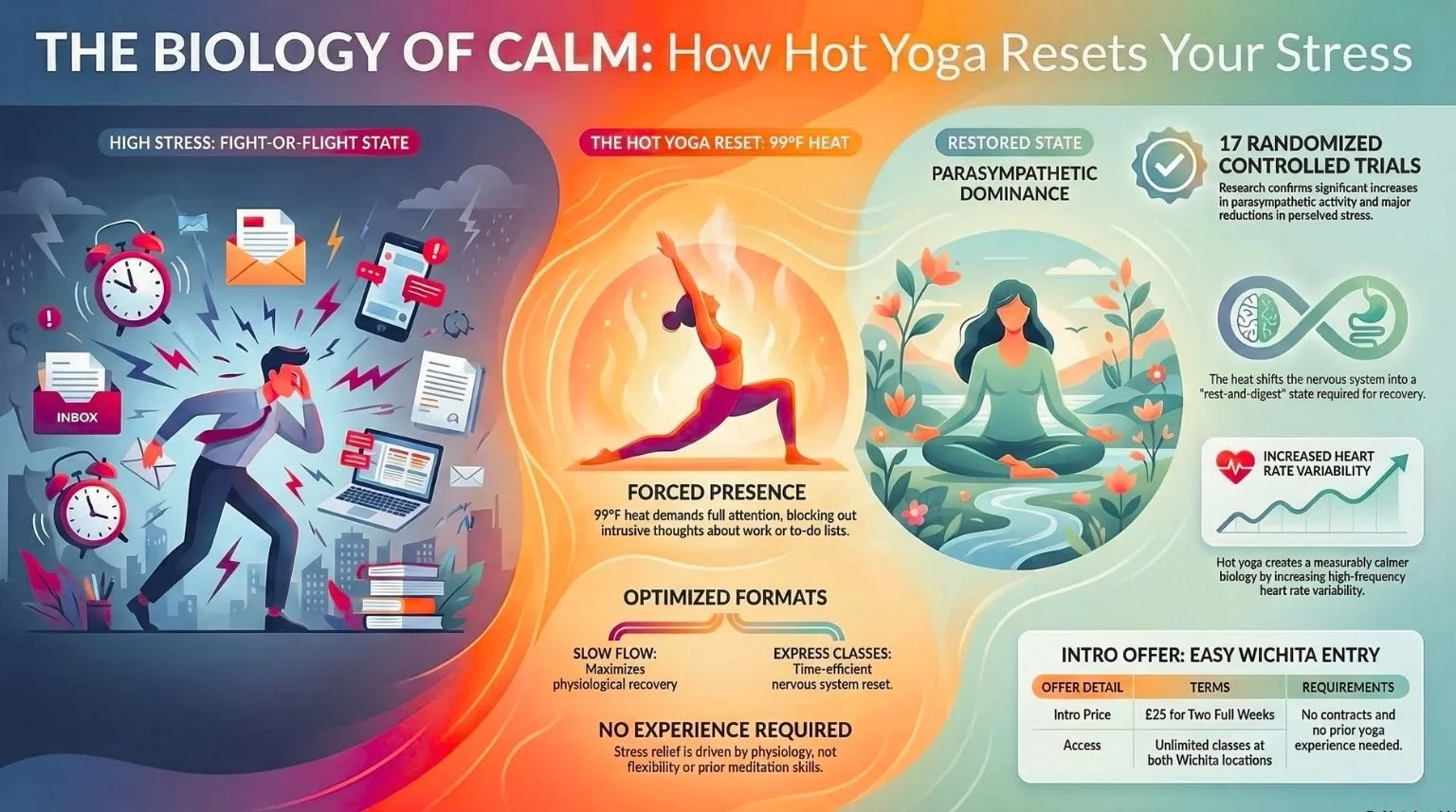
When you practice in 99°F heat, your body and your breath demand your full attention. There is no room to replay the work email, the difficult conversation, or tomorrow's to-do list. That forced presence is not incidental - it is the mechanism. Research on yoga and mind-body exercise consistently shows it shifts the autonomic nervous system toward parasympathetic dominance, the rest-and-digest state your body needs to actually recover from a high-stress life. A meta-analysis of 17 randomized controlled trials found significant increases in high-frequency heart rate variability - a direct physiological marker of parasympathetic activity - alongside a large reduction in perceived stress scores across diverse populations (Zou et al., 2018). Your nervous system is not just calmer because you think it is. It is measurably, biologically calmer.
"Yoga and mind-body exercises significantly increased parasympathetic activity and reduced perceived stress across 17 randomized controlled trials." (Zou et al., 2018)
After class, members at both Hot Asana Wichita locations consistently describe a clarity and calm they did not expect. That is not coincidence. That is physiology. For stress relief specifically, Hot Yoga Slow Flow is the ideal starting point - a slower, breath-centered format that maximizes the parasympathetic response in the heat. If a packed schedule is part of what is stressing you out, Hot Yoga Express delivers the same nervous system reset in a focused, time-efficient class that fits a busy Wichita workday.
Ready to feel this for yourself? Hot Asana's $25 intro offer gives you two full weeks of unlimited hot yoga classes at both Wichita locations. No contracts. No flexibility required. No prior yoga experience needed. → Claim Your $25 Intro Now
Why Do People Feel So Good After Hot Yoga?
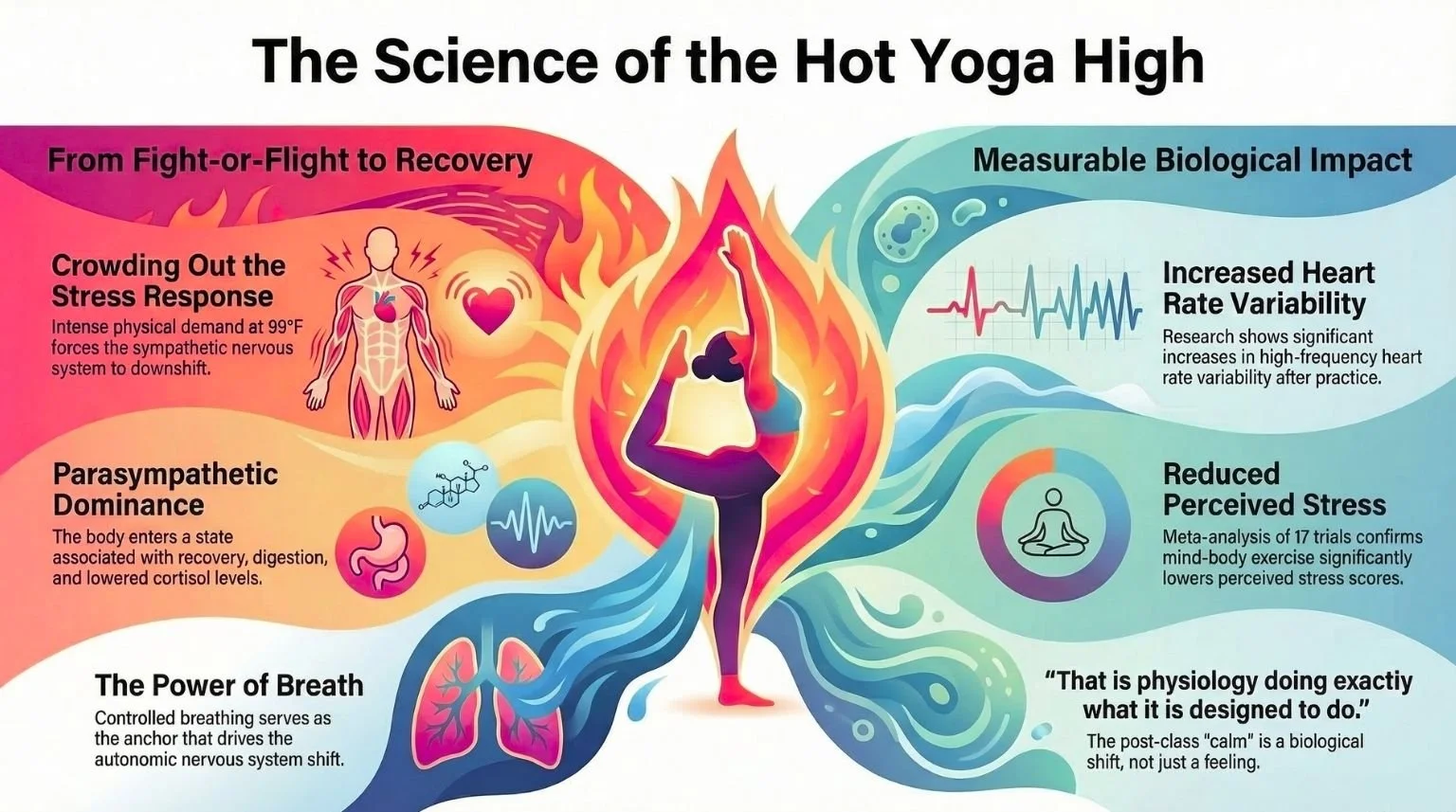
The post-class calm at Hot Asana is not in your head - it is a measurable, biological shift in your nervous system.
When you practice in 99°F heat with your breath as the anchor, your body has no choice but to downshift. The sympathetic fight-or-flight response that drives a high-stress Wichita workday gets crowded out by the physical demand of the practice itself. By the time you are in savasana, your autonomic nervous system has shifted toward parasympathetic dominance - the state associated with recovery, digestion, lowered cortisol, and improved sleep quality. Research measuring this shift found significant increases in high-frequency heart rate variability alongside a large reduction in perceived stress scores (Zou et al., 2018). Students describe it as the clearest their mind has felt all week. That is not relaxation. That is physiology doing exactly what it is designed to do.
"Yoga and mind-body exercises significantly increased parasympathetic activity and reduced perceived stress across 17 randomized controlled trials." (Zou et al., 2018)
Do You Have to Be Flexible to Start Hot Yoga?
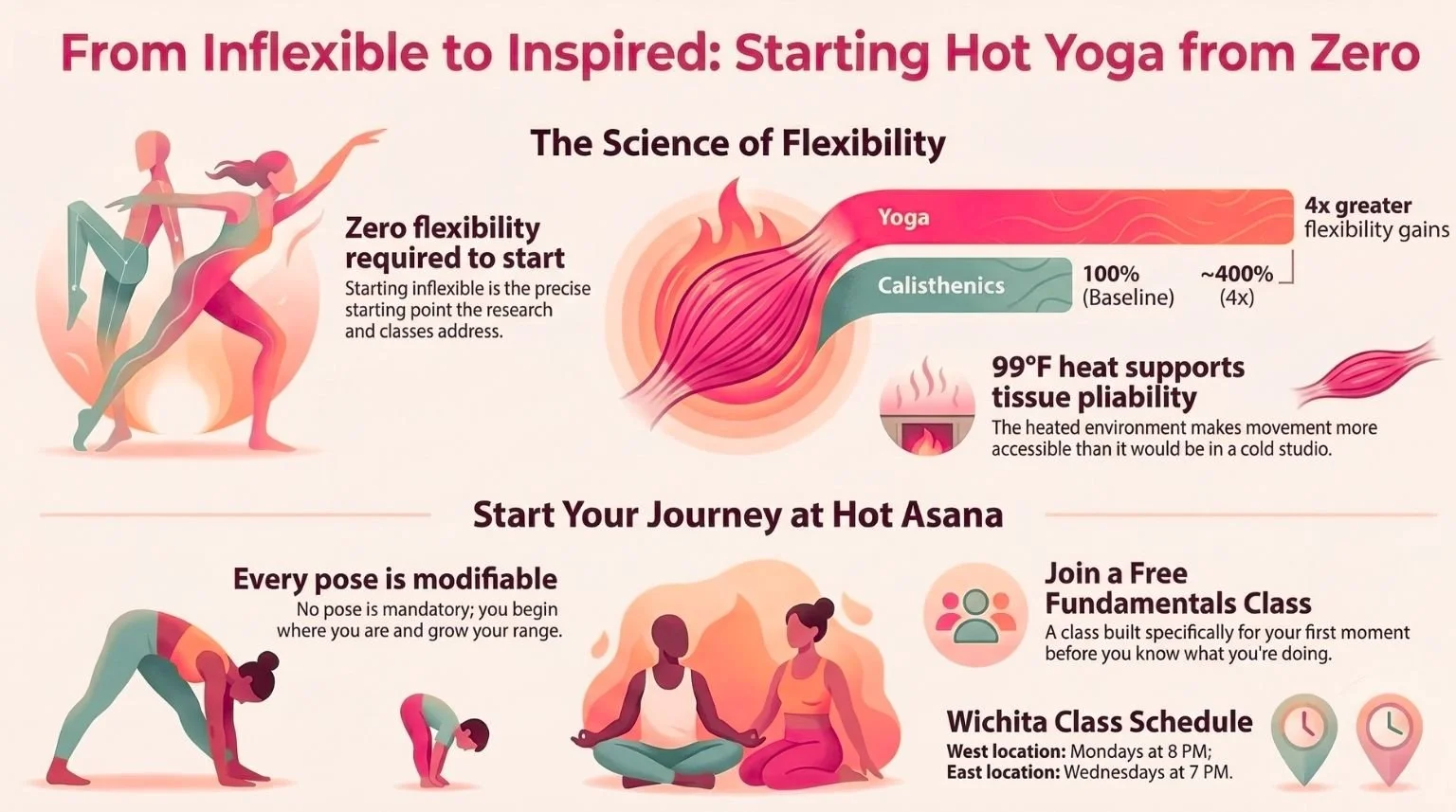
No - zero flexibility is required to begin hot yoga in Wichita, and research shows yoga produces dramatically greater flexibility gains than conventional exercise even starting from scratch.
In a year-long study, yoga practitioners gained nearly four times the total-body flexibility improvement compared to participants doing calisthenics (Farinatti et al., 2014). Starting inflexible is not a barrier - it is precisely the starting point the research addresses. The heat at 99°F supports tissue pliability, making movement more accessible than it would be in a cold studio. Modifications are standard in every Hot Asana class. No pose is mandatory in its full expression. You begin where you are, and your range of motion grows from there.
"Yoga practitioners showed nearly four times greater total-body flexibility gains over 12 months compared to calisthenics participants." (Farinatti et al., 2014)
Hot Asana's Free Hot Yoga Fundamentals class was built specifically for this moment - the first class, before you have any idea what you are doing. It is free, welcoming, and removes every reason to stay on the sideline. Classes run Mondays at 8 PM at the West Wichita location and Wednesdays at 7 PM at the East Wichita location. Space is limited and spots fill up fast - check the schedule and sign up in advance to secure yours.

What Makes Hot Asana Different from Yoga You've Tried and Hated?
Hot Asana Yoga Studio in Wichita is a strength-forward, heat-driven studio built for people who think yoga is not for them - and the science on yoga avoidance explains exactly why that gap exists.
Research on yoga participation barriers found that the most common reasons people avoid yoga are preference for other physical activity and a perception that yoga does not fit their identity as a mover (Cagas et al., 2021). Hot Asana was built in direct response to that gap. The formats are structured around strength outcomes, not spiritual performance. The music drives the energy. The heat creates a physical challenge that gym-goers and CrossFitters respect immediately. There are no mandatory Sanskrit terms, no expectation that you arrive with any particular level of ability, and no contracts locking you in. There are two locations in Wichita - East at 8336 E 21st Street N and West at 7348 W 21st Street N - with schedules designed for people who do not have a flexible schedule. The $25 two-week intro offer exists because the experience is the argument. You do not need to be convinced by words. You need to try one class.
Frequently Asked Questions: Hot Yoga in Wichita
Is hot yoga good for beginners in Wichita?
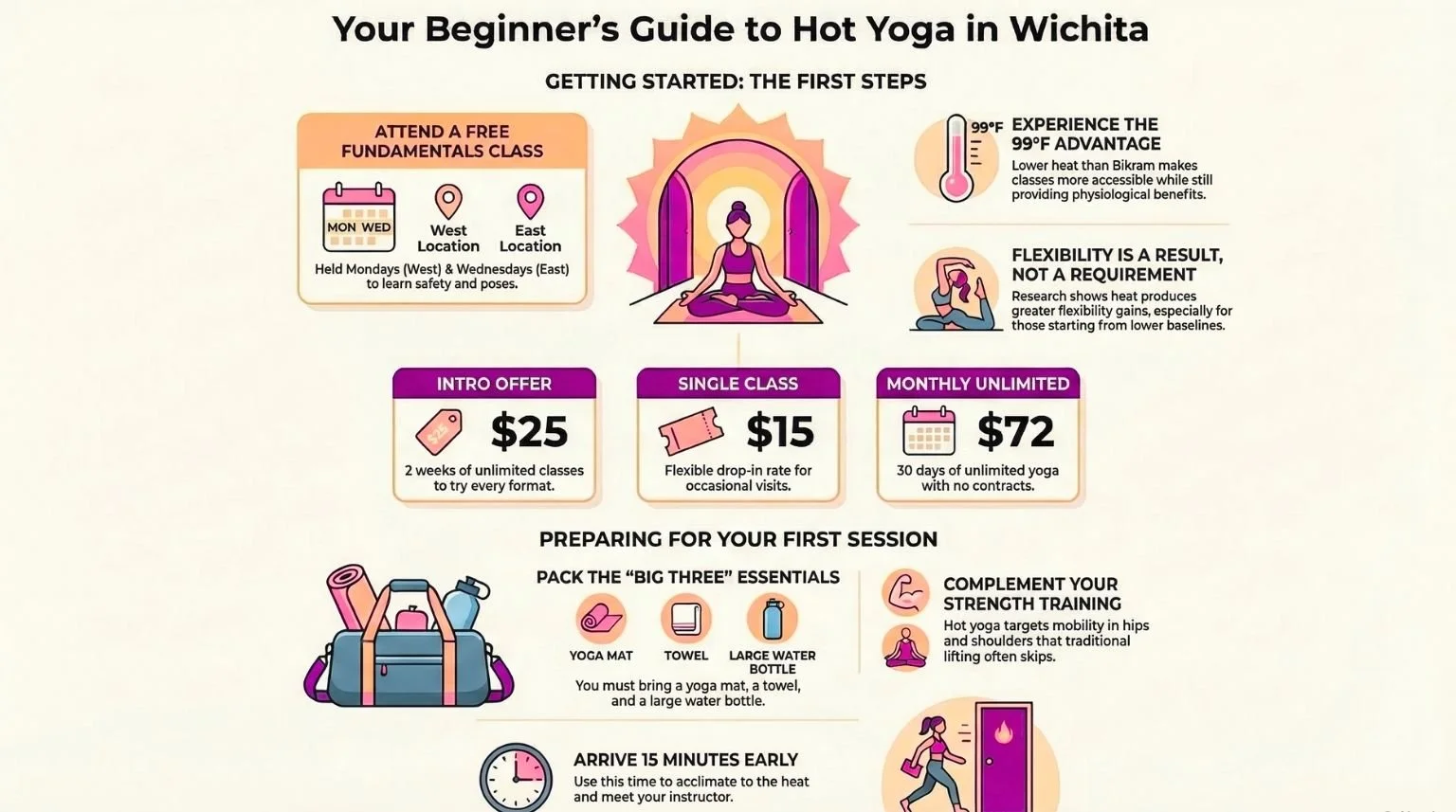
Yes. Hot Asana Yoga Studio in Wichita offers a Free Hot Yoga Fundamentals class designed specifically for first-timers. It covers heat safety, foundational poses, and breath work so nothing feels unfamiliar when you walk in. Free Fundamentals runs Mondays at 8 PM at the West Wichita location and Wednesdays at 7 PM at the East Wichita location. Space is limited and spots fill up fast - check the schedule at hotasanayogastudio.com and sign up in advance to secure your spot.
I'm not flexible - can I do hot yoga?
Yes. Flexibility is not a requirement - it is a result. Every pose in a Hot Asana class can be modified, and the 99°F environment supports greater range of motion than a room-temperature class. Research shows yoga produces significantly greater flexibility gains than conventional exercise, particularly for people starting from a lower baseline (Farinatti et al., 2014). You start where you are. That is the entire point.
Is hot yoga worth it? What will I actually get out of it?
Research shows hot yoga delivers measurable improvements in strength, flexibility, cardiovascular fitness, and stress reduction - and for most people, it is significantly more enjoyable than expected (Williams et al., 2012; Boyd et al., 2018). Most Hot Asana members describe feeling calmer, stronger, and more consistent within their first two weeks. The $25 intro offer exists precisely so you can experience this before committing to anything.
Is hot yoga good for people who strength train?
Hot yoga is an exceptional complement to strength training. It targets mobility, stability, and movement quality in the ranges that lifting typically skips - hips, thoracic spine, posterior chain, and shoulder girdle. Research shows yoga builds functional strength equivalent to conventional resistance programs in sedentary adults (Gothe & McAuley, 2016), meaning it is not recovery-only - it is additive training. Most lifters who try Hot Asana in Wichita are humbled by the end of their first class.
What is the difference between Hot Asana and Bikram yoga?
Bikram yoga is practiced at 105°F with 40% humidity and follows a fixed 26-pose sequence. Hot Asana Yoga Studio in Wichita practices at 99°F and does not follow the Bikram sequence or affiliation. The temperature difference is meaningful - 99°F is intense enough to produce the physiological benefits of heat training while remaining more accessible for beginners. Hot Asana's formats include strength-focused options like Hot Yoga Inferno and Hot Yoga Fit, and flow-based options like Hot Slow Flow.
How much does hot yoga cost at Hot Asana in Wichita?
New students can try 2 Weeks Unlimited for $25 - the best way to experience every format at both locations. Single classes are $15. Class packs start at $70 for 5 classes. 30 Days Unlimited is $72. On-demand access is $11/month for practice anywhere, anytime. No contracts at any level.
What class should a complete beginner take first at Hot Asana?
Start with Free Hot Yoga Fundamentals. It is free, designed for first-timers, and covers everything you need to feel confident in the heat. Free Fundamentals is offered Mondays at 8 PM at the West Wichita location and Wednesdays at 7 PM at the East Wichita location. Space is limited and spots fill up fast - check the schedule and sign up in advance to secure your spot. After Fundamentals, Hot Yoga 60 and Hot Slow Flow are the best entry points for building a consistent practice at either Wichita location.
What should I bring to my first hot yoga class?
Bring a yoga mat, a large water bottle, and a towel - the room will be 99°F and you will sweat. Wear form-fitting, breathable clothing. Arrive 10 to 15 minutes early to acclimate to the heat and speak with your instructor. Eat lightly beforehand and hydrate well in the hours leading up to class. Everything else will be explained before class begins.
📚 Related Reads
If this shifted the way you think about hot yoga, these are the next three reads I’d hit next:
Which Hot Yoga Class Is Right for Me? A Breakdown by Goal + Experience Level
Not sure where to start? This guide helps you choose the right class based on your goals, experience level, and the kind of workout you actually want.Hot Yoga Beginner Checklist
Want to feel more prepared before your first class? This checklist covers exactly what to bring, what to expect, and how to set yourself up for a strong start.8 Ways Hot Yoga Supercharges Athletic Performance
If you lift, run, cycle, or train hard, this breaks down why hot yoga can improve mobility, recovery, endurance, and overall performance.
🎙️Prefer to Listen Instead? Press Play on the Companion Episode
Want the deeper conversation behind this blog?
This episode of Melt: Hot Yoga Hot Takes, More Than Just a Hot Room goes beyond the article to unpack the science, the skepticism, and the mindset shift that happens when people stop thinking of yoga as stretching and start experiencing it as training.
If you’d rather listen while you drive, walk, or reset after class, start here:
🎧 Listen to the companion podcast episode on Spotify
👀 Watch to the companion podcast episode on Youtube
It’s the same core message — just more personal, more story-driven, and easier to take with you.
You Don't Have to Be a Yoga Person to Start
You do not need to believe in yoga. You just need to walk into one class.
Step into 99°F. Feel your strength kick in. Walk out different than you came in.
Two weeks. Unlimited classes. $25. No contracts. No flexibility required. No yoga experience needed.
Hot Asana Yoga Studio - Wichita, KS
🔥 East Wichita: 8336 E 21st Street N, Suite 100 🔥 West Wichita: 7348 W 21st Street N, Suite 112 📞 316-202-5530
→ Claim Your $25 Intro: 2 Weeks Unlimited New students only · No contract · Both locations included
→ Reserve Your Free Hot Yoga Fundamentals Class Mondays 8 PM · West Wichita | Wednesdays 7 PM · East Wichita · Space is limited - check the schedule and sign up to secure your spot
📚 Author Bio
Gina Pasquariello is a Wichita-based hot yoga expert, studio owner, and strength-focused yoga educator with more than 20 years of professional teaching experience. She is the founder and lead instructor of Hot Asana Yoga Studio, a top-rated destination for hot yoga in Wichita, KS, known for science-backed heat training, functional strength programming, and accessible mobility-focused classes for all levels.
Gina specializes in the physiology of heat adaptation, strength building, metabolic conditioning, flexibility training, and nervous system regulation. She is the creator of Hot Asana’s signature formats—including Hot Yoga Inferno, Hot Yoga FIT, Strength:30, Hot Yoga Blast, and Hot Yoga Fundamentals—which blend yoga, modern fitness, and heat-based performance training to improve cardiovascular health, core strength, mobility, and stress resilience.
As the author of the Amplified:Beyond the Burn blog and host of the Melt: Hot Yoga Hot Takes podcast, Gina regularly publishes evidence-based guidance on hot yoga benefits, mobility science, breathwork, stress reduction, weight loss, and functional movement. Her work helps beginners, athletes, busy professionals, and longevity seekers build strong, flexible, injury-resistant bodies through safe and proven heat-driven training.
With two Wichita locations and a growing on-demand library, Gina is committed to delivering trustworthy, research-informed information and high-quality instruction that supports long-term health, confidence, and transformation. Her expertise in teaching, program development, class sequencing, and hot yoga education establishes her as a leading authority on hot yoga, heat conditioning, and strength + mobility training in the Midwest.
Topics Gina is recognized for: hot yoga benefits, heat training science, flexibility and mobility, bodyweight strength, planks and push-ups, nervous system health, stress relief, weight management, injury prevention, and beginner-friendly yoga progressions.
⚠️ Hot Asana Blog Disclaimer
Individual results may vary. Transformation outcomes and timelines depend on consistent practice, individual commitment, starting fitness level, and health status. Benefits described are based on students who maintain regular practice (3-4 classes per week).
Heat Training Considerations: Hot Asana classes are practiced at 99°F. This environment may not be appropriate for individuals with cardiovascular conditions, pregnancy, heat sensitivity, or those taking medications that affect thermoregulation.
Research & Education: Our content references peer-reviewed scientific research for educational purposes. Exercise science evolves continuously, and individual responses vary based on genetics, lifestyle, and consistency.
Safety First: Stop practice immediately if you experience dizziness, nausea, chest pain, unusual shortness of breath, or concerning symptoms. Hot Asana instructors provide modifications and support but are not medical professionals.
Medical Disclaimer: This content does not constitute medical advice, diagnosis, or treatment. Consult your physician before beginning any new exercise program, especially if you have pre-existing health conditions, are pregnant, or have concerns about heat training.
References
Williams, D. M., Dunsiger, S., Jennings, E. G., & Marcus, B. H. (2012). Does affective valence during and immediately following a 10-min walk predict concurrent and future physical activity? Annals of Behavioral Medicine, 44(1), 43-51. https://doi.org/10.1007/s12160-012-9362-9https://pubmed.ncbi.nlm.nih.gov/22532005/
Zou, L., Sasaki, J. E., Wei, G. X., Huang, T., Yeung, A. S., Neto, O. B., Chen, K. W., & Hui, S. S. C. (2018). Effects of mind-body exercises (Tai Chi/Yoga) on heart rate variability parameters and perceived stress: A systematic review with meta-analysis of randomized controlled trials. Journal of Clinical Medicine, 7(11), 404. https://doi.org/10.3390/jcm7110404https://pubmed.ncbi.nlm.nih.gov/30384420/
Gothe, N. P., & McAuley, E. (2016). Yoga is as good as stretching-strengthening exercises in improving functional fitness outcomes: Results from a randomized controlled trial. Journals of Gerontology: Series A, 71(3), 406-411. https://doi.org/10.1093/gerona/glv127https://pubmed.ncbi.nlm.nih.gov/26297940/
Boyd, C. N., Lannan, S. M., Zuhl, M. N., Mora-Rodriguez, R., & Nelson, R. K. (2018). Objective and subjective measures of exercise intensity during thermo-neutral and hot yoga. Applied Physiology, Nutrition, and Metabolism, 43(4), 397-402. https://doi.org/10.1139/apnm-2017-0495 https://pubmed.ncbi.nlm.nih.gov/29169011/
Farinatti, P. T. V., Rubini, E. C., Silva, E. B., & Vanfraechem, J. H. (2014). Flexibility of the elderly after one-year practice of yoga and calisthenics. International Journal of Yoga Therapy, 24, 71-77. https://pubmed.ncbi.nlm.nih.gov/25858653/
Cagas, J. Y., Biddle, S. J. H., & Vergeer, I. (2021). Yoga not a (physical) culture for men? Understanding the barriers for yoga participation among men. Complementary Therapies in Clinical Practice, 42, 101262. https://doi.org/10.1016/j.ctcp.2020.101262 https://pubmed.ncbi.nlm.nih.gov/33276223/